Before buying a lamp, sit where you will use it
Look toward the lamp from your usual seat. If a bright bare bulb is directly visible, try a different position or a shade designed for that lamp. Check reflections in windows and polished furniture too. The goal is comfortable light with enough illumination on the page, not simply making everything darker.
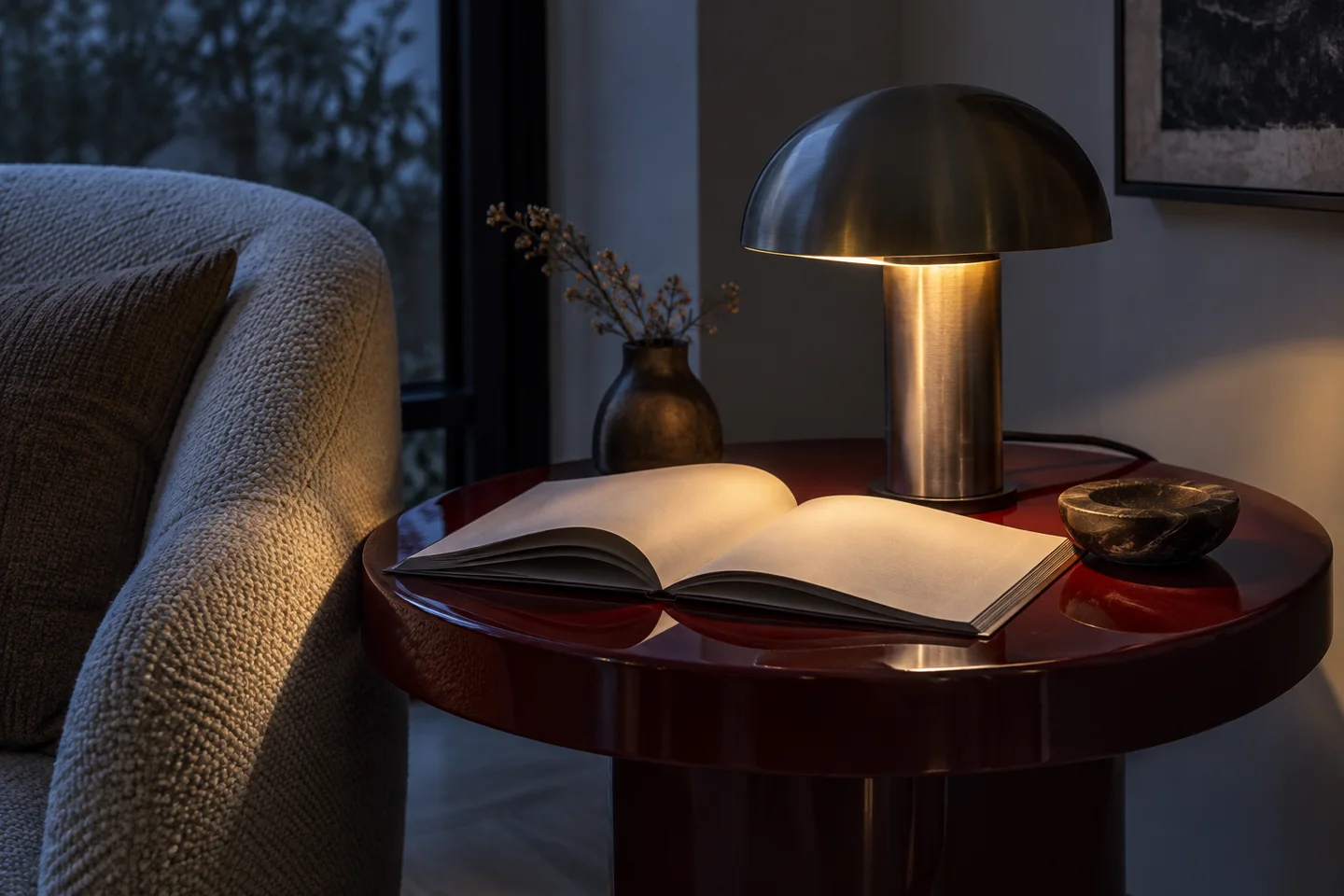
Never improvise a shade or cover a lamp with fabric. Check the fixture’s bulb type, maximum rating, shade fitting and dimmer compatibility. The illustrated linen-shade lamp is not the brass mushroom lamp in the similar-style selection below; compare their light direction as well as their appearance.
Start with an evening audit
Visit the room after daylight has faded, with the curtains and furniture as you normally use them. Switch on one existing light at a time. Sit in the main chair, at the table and beside the bed if this is a bedroom. Note where you need more useful light and where you want less.
Describe the problem precisely: the page is shaded by your shoulder, a lamp reflects in the screen, or the far side of the room is difficult to see. That observation is more actionable than saying the room needs three lamps. Keep the lamps you have in the first round of experiments.
The Valenne shortlist
One light for use. One book for ideas.
The glass lamp is an option for a small surface. Compare its bulb, glare and electrical requirements before choosing it.
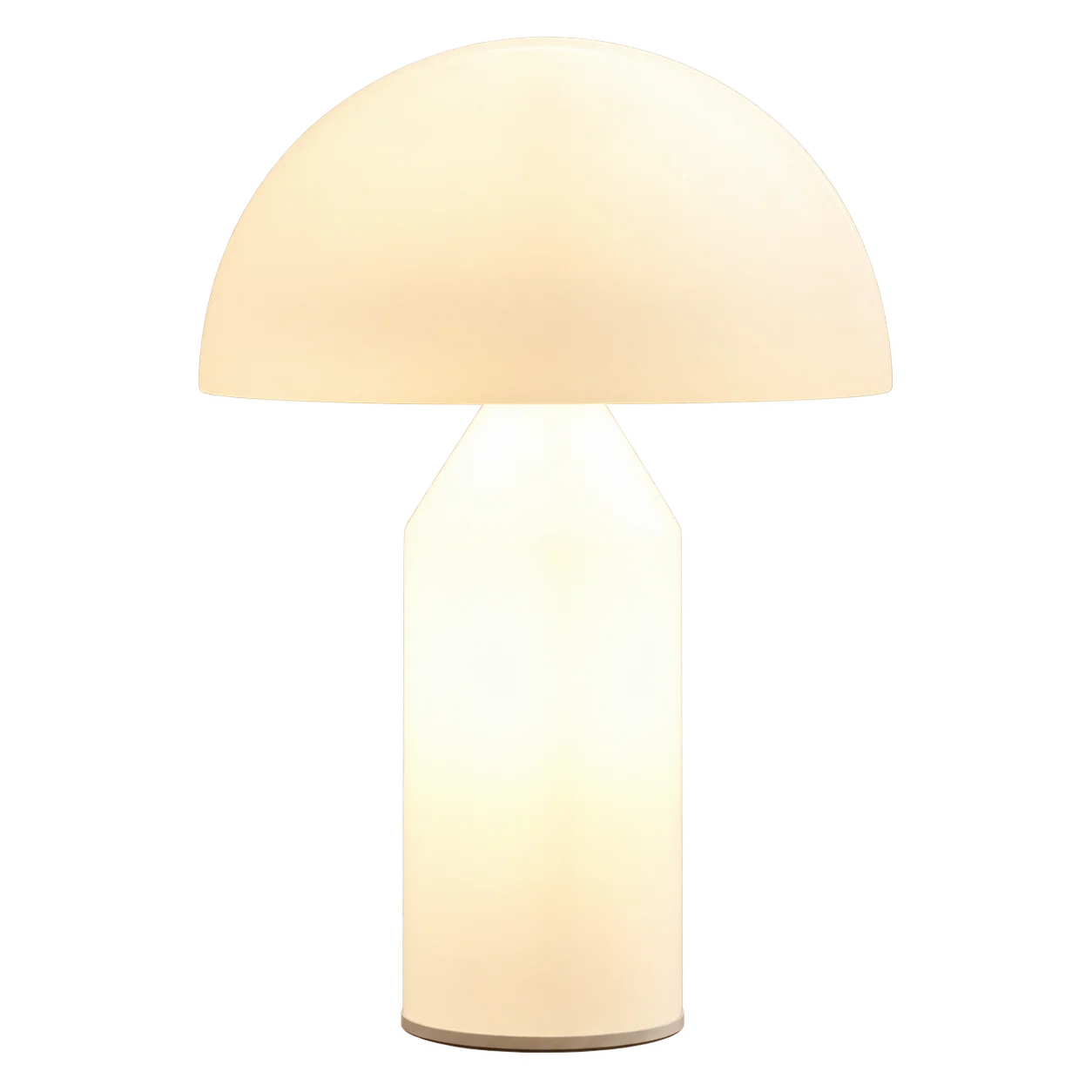
Glass shade and body; 14 in tall
A compact glass mushroom lamp for a second pool of light beside a chair or bed.
Before you choose Check the E26 bulb, voltage and plug for your country, and confirm the selected glass finish.
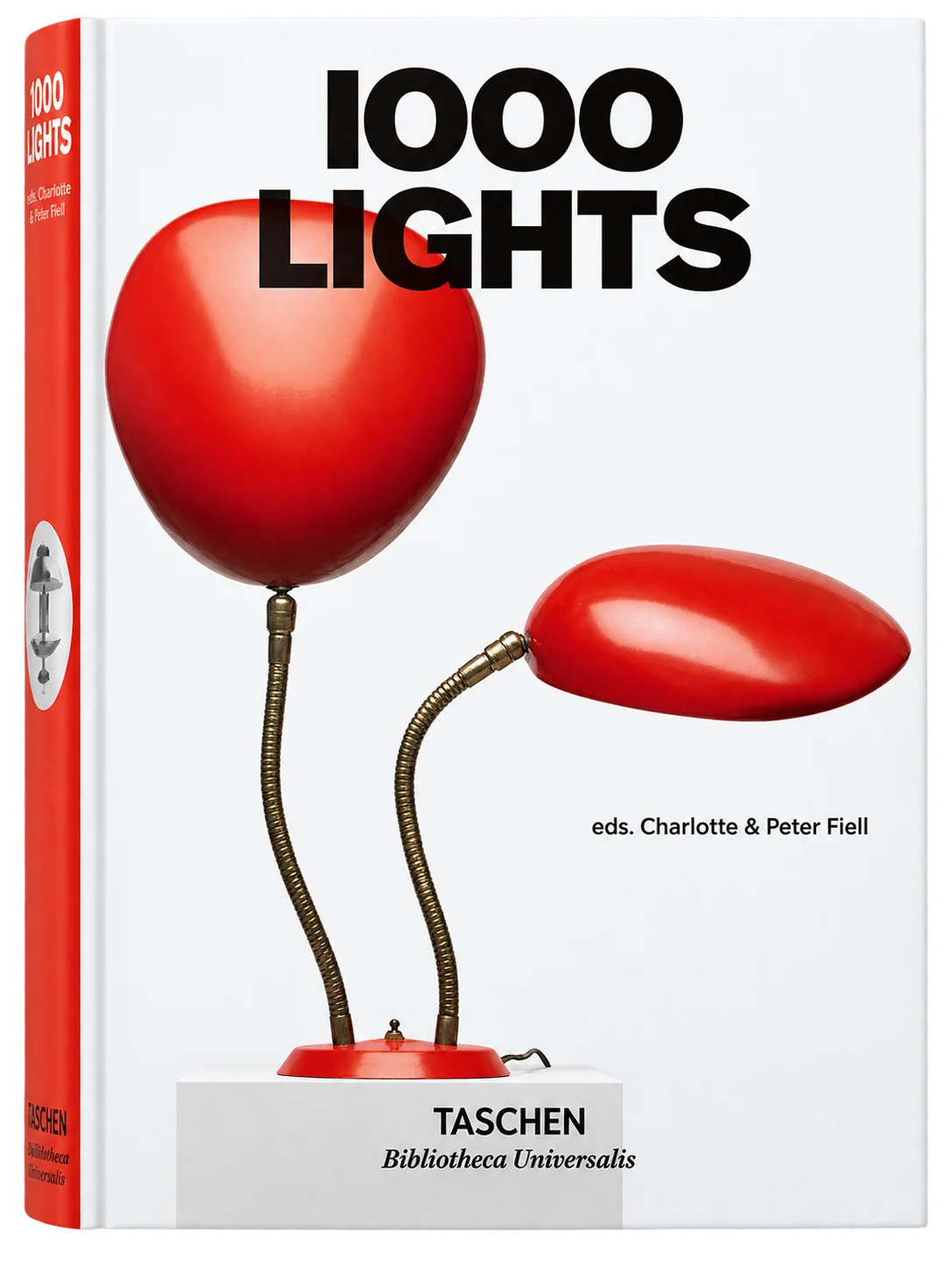
Charlotte & Peter Fiell · TASCHEN · hardcover
A chronological collection of lighting design, useful for comparing shades, bases and silhouettes.
Before you choose Choose the multilingual Bibliotheca Universalis edition; check the format and seller.
Give each light a job
We approach a room in three layers: an easy background glow, focused light where an activity needs it, and a softer light that brings attention to an object or corner. Start with the effect you want in each part of the room. A single fixture can serve more than one purpose, and daylight will change the balance throughout the day.
For a living room, begin with enough general illumination to use the room comfortably. Add a light where you read or work. Only then decide whether a shelf, artwork or corner would benefit from a quieter decorative light. One fixture can contribute to more than one role, and a small room may need very little extra equipment.
Place the light from the user's position
For reading, test a lamp beside the actual chair with a book open. Adjust its position so the useful light reaches the page without your body blocking it. Sit back as well as leaning forward. A lamp that looks right in a photograph may expose its bulb when you settle into the seat.
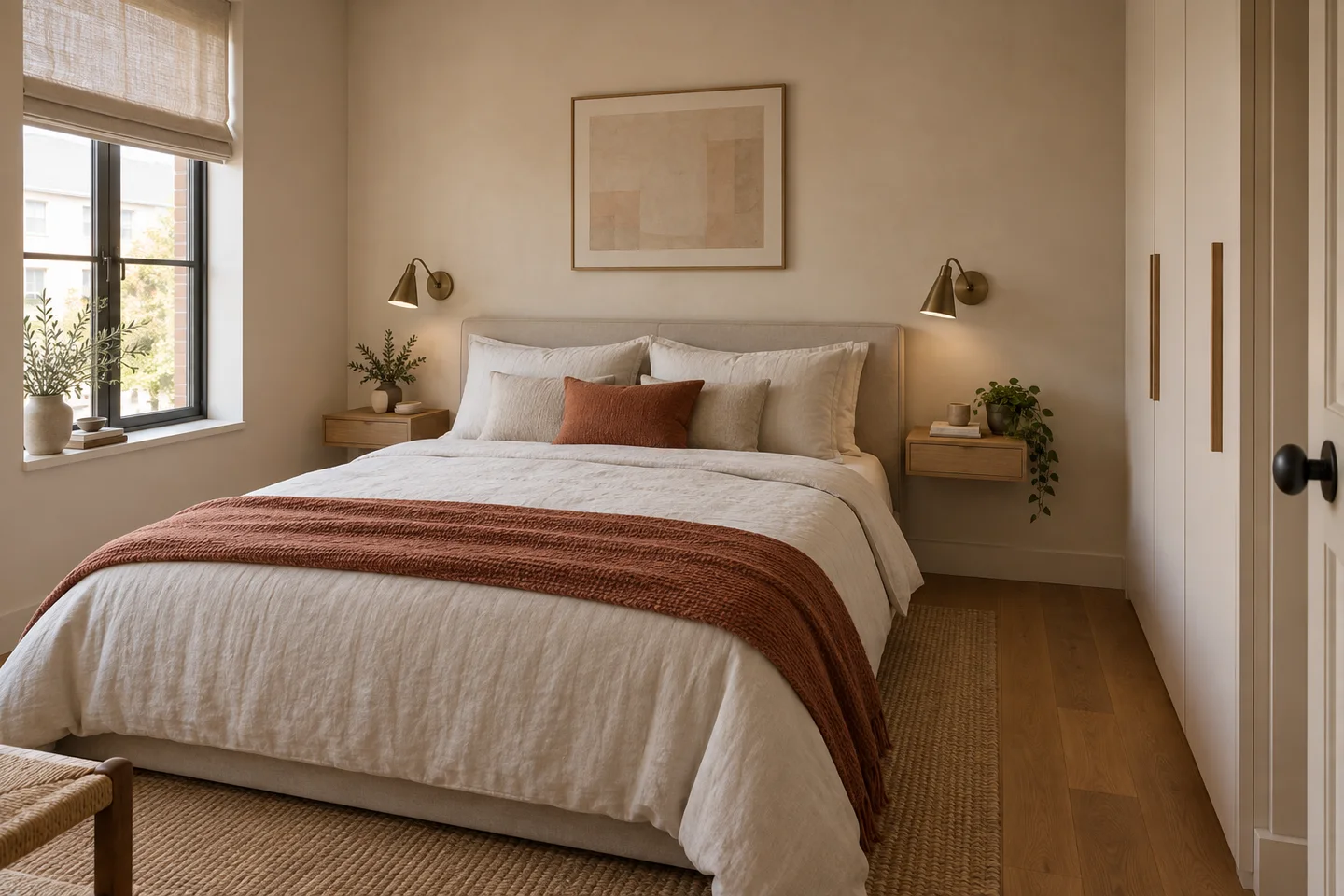
For a shared dining and work table, try both activities. A light that suits a meal may be too weak or poorly directed for paperwork. Check a laptop screen for reflections from your normal angle. In a bedroom, see whether you can reach the switch without leaving the bed and whether the light bothers the other occupant.
Read lumens and color temperature separately
Look at lumens when comparing brightness and watts when comparing power use. We choose the light output around the task, then consider how the shade and position direct it. A brighter bulb inside a dense shade can feel very different from the same output in an open fixture.
Color temperature, measured in kelvin, describes the light's warm or cool appearance. Lower numbers look warmer; higher numbers look cooler. Begin by comparing the labels on the bulbs you already like. If neighboring lamps look unexpectedly different, check this number before replacing a shade or repainting the room. Warm appearance and low brightness are separate choices.
Make the evening setting easy to use
Choose an ordinary evening arrangement you can reach with a simple sequence of switches. A compatible dimmer may make one light more flexible, but an elaborate control system is unnecessary if two accessible lamp switches do the job. Confirm that the particular bulb, fixture and dimmer are intended to work together.
Compare the room from both seated and standing positions. Keep the cord route in the placement plan and follow the fixture's instructions for location, clearance and bulb limits. Treat hardwired changes as installation work for a qualified professional; moving a plug-in lamp is a different kind of decision.
Buy for the missing function
Write a brief before browsing: where the lamp will stand, which activity it serves, how it switches on, the available footprint and whether you need an adjustable shade or arm. Then compare shape and finish. A low decorative table lamp and an adjustable reading lamp may both be attractive, but they answer different needs.
If a new lamp is still necessary, change one part of the arrangement and reassess it in use. Keep product packaging and follow the seller's actual return conditions while deciding. A room that works for reading and conversation is a better result than a collection of lamps chosen independently.