Four useful pieces, one clear space
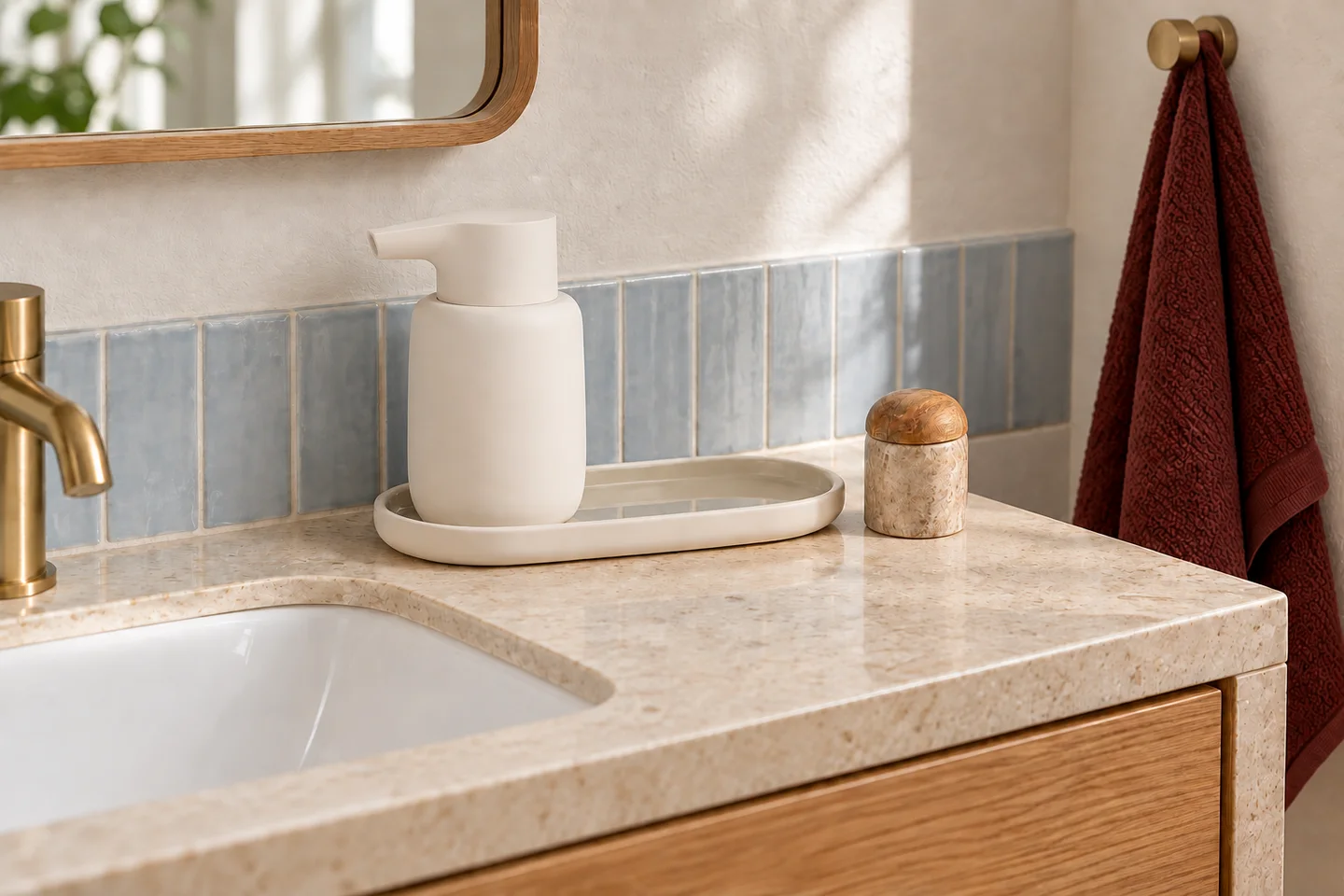
Start with a tray for loose items, a refillable pump, a covered pot for genuinely small things and a hand towel. Keep one clear landing area beside the basin. The illustrated tray and pump are original styling concepts; the SONO pieces below are a separate similar option.
Check the usable inside of a tray, not just its outer dimensions. A 19 × 10 cm outer footprint does not guarantee that two accessories fit together. The miniature marble canister is only about 2.25 inches wide: useful for a few rings, not a full storage solution. Dry wet surfaces and follow each material’s care instructions.
Map the splash area before choosing accessories
Clear the vanity and use the sink normally. Notice where drops collect, how much room your hands need around the faucet and which side you reach toward for a towel. Treat this as the working area. Keep soap within easy reach, while placing decorative objects in the drier space beyond it, if such a space exists.
Measure that remaining surface, including the narrow strips beside and behind the basin. The outside dimensions of a tray matter more than the number of bottles it holds in a product photo. Try a paper outline before buying, and check that a pump can be pressed without bumping the faucet, mirror cabinet or nearby shelf.
The Valenne shortlist
Give everyday things a place.
A dispenser, a small tray and a tiny lidded container can replace a scattered row of packaging.
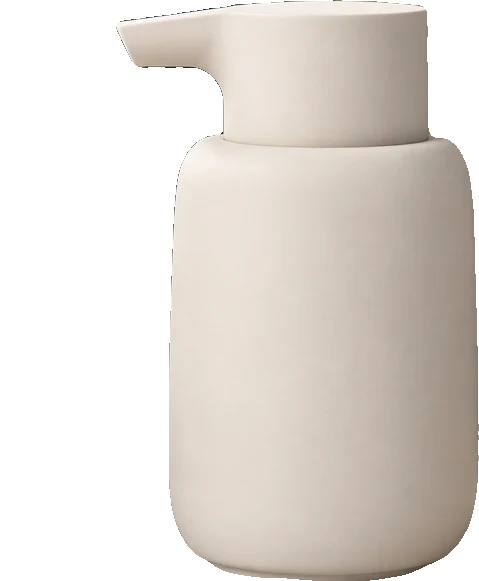
Moonbeam; 250ml; H14cm x D8.5cm with 9.5cm depth
A refillable dispenser keeps everyday soap in a single, quiet form.
Before you choose Leave room behind the pump and check the manufacturer’s cleaning instructions.
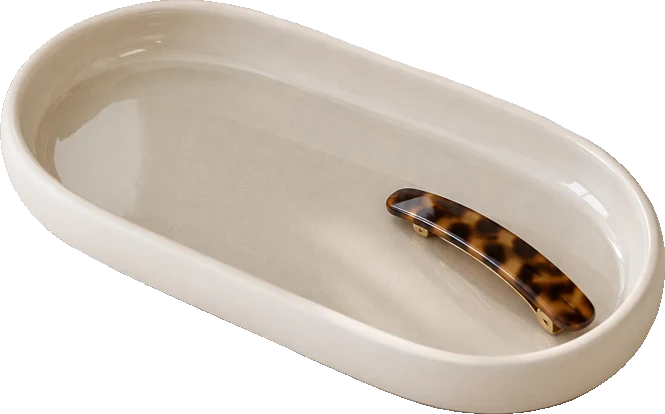
Moonbeam; approximately 19 × 10 cm footprint
A small oval tray gives toiletries a defined place without taking over the counter.
Before you choose Measure the usable flat surface, not just the basin cabinet, before choosing a tray.
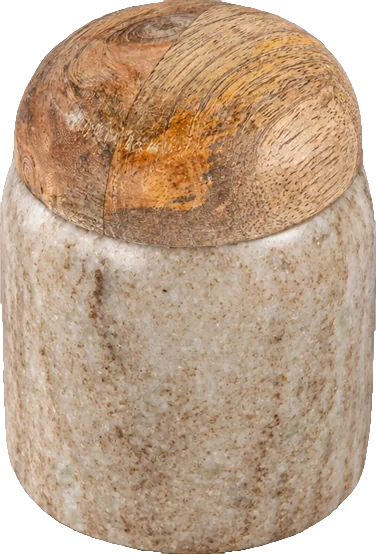
Beige; 2.25 inches round x 2.75 inches height
A miniature lidded pot makes a place for rings and other very small items.
Before you choose This is a small keepsake container, not a full-size cotton-pad jar. Keep the wood lid out of standing water.
Make daily essentials the visible arrangement
Start with the products used every morning and evening. A dispenser and a toothbrush holder may be the whole counter arrangement in a compact bathroom. Group them only if a tray makes lifting and cleaning easier; a tray that barely fits can turn two simple objects into a bulky obstacle.
Choose shapes that leave your hand room to work. A broad decorative jar may look appealing but use the space needed for a washcloth or contact-lens case. Keep labels and instructions with products that need them, and decant only where it is practical. A coordinated appearance can come from one repeated color without transferring every product into a matching container.
For a quieter combination, we favor a cream dispenser and shallow cream tray, with any small stone canister kept in the drier area. Its 2.25-inch outside diameter leaves a compact footprint; check the opening against what you intend to keep inside.
Use a small palette to connect the fixed finishes
The tile, countertop, vanity and faucet already establish much of the room. Choose accessories that relate to one or two of those finishes. A warm white dispenser can connect white tile to an oak cabinet; a dark tray can repeat the outline of a black mirror. The goal is a visible relationship, rather than a perfectly matched bathroom set.
Bring softness through the towel before adding another countertop object. Compare a cream, muted olive or dusty blue towel against the finishes you already have. Hang it where it will be used, then stand in the doorway. A single generous area of color often reads more clearly than several tiny decorative accents crowded around the sink.
Choose materials for the place they will sit
Read the care instructions for the particular tray, holder or jar. A stone appearance does not tell you how a finish handles soap, standing water or bathroom cleaning products. Near the basin, favor accessories whose stated use and cleaning method fit that location. Save objects with more demanding care for a genuinely dry shelf.
Consider the shape as well as the finish. Deep ridges and narrow corners take longer to wipe; a heavy tray may be awkward to lift in a tiny sink area. Check whether the dispenser can be refilled without dismantling the display. Practical bathroom styling includes the weekly cleaning routine as well as the first arrangement.
Move the overflow into storage you can reach
Separate everyday products from backups, occasional tools and guest supplies. Give the daily items the easiest drawer or shelf, using small containers where they help keep categories distinct. Check drawer depth and the plumbing beneath the sink before choosing organizers. An attractive box is useful only if the drawer closes and its contents are easy to retrieve.
We look to the walls when the counter and floor are already working hard. Where it suits the room, a shallow shelf or existing cabinet can hold dry supplies without consuming the sink ledge. Check the door swing and your normal standing position before adding anything beside or above the vanity.
Add one finishing detail, then rehearse the routine
If there is still a comfortable dry area, try one small vase or decorative container. Keep it below the part of the mirror you use and outside the reach of cabinet doors. In a very tight room, the finishing detail can be a framed print elsewhere on the wall or the towel itself; the counter can remain devoted to washing.
Run through brushing teeth, washing your face and wiping the surface. Open the drawers while someone is standing where they normally dress. If an accessory repeatedly needs moving, simplify the arrangement or relocate it. The finished room should be easy to reset with a quick wipe and a few objects returned to familiar places.