Start with the front legs
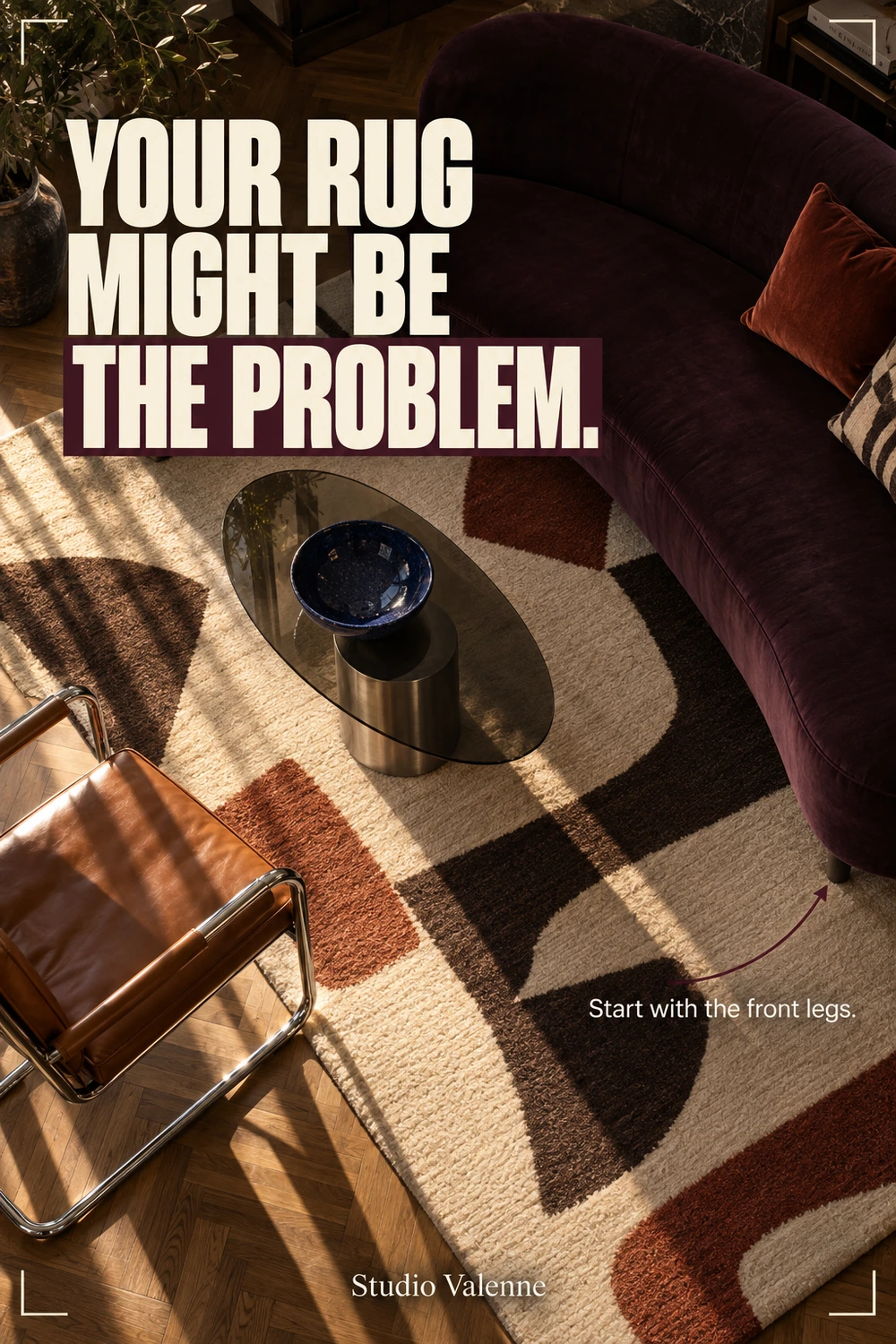
A rug that fits only under the coffee table can leave the seats feeling like separate pieces. Look at the sofa’s front foot in this example: the overlap is one useful starting point. Check each nearby chair too, rather than judging the rug only from the middle of the room.
Try a footprint that brings the front legs of the sofa and the chairs you use together onto the same rug. Compare it with a larger footprint that holds the whole group. Keep the option that connects the seating while leaving doors, storage and the main walking route usable.
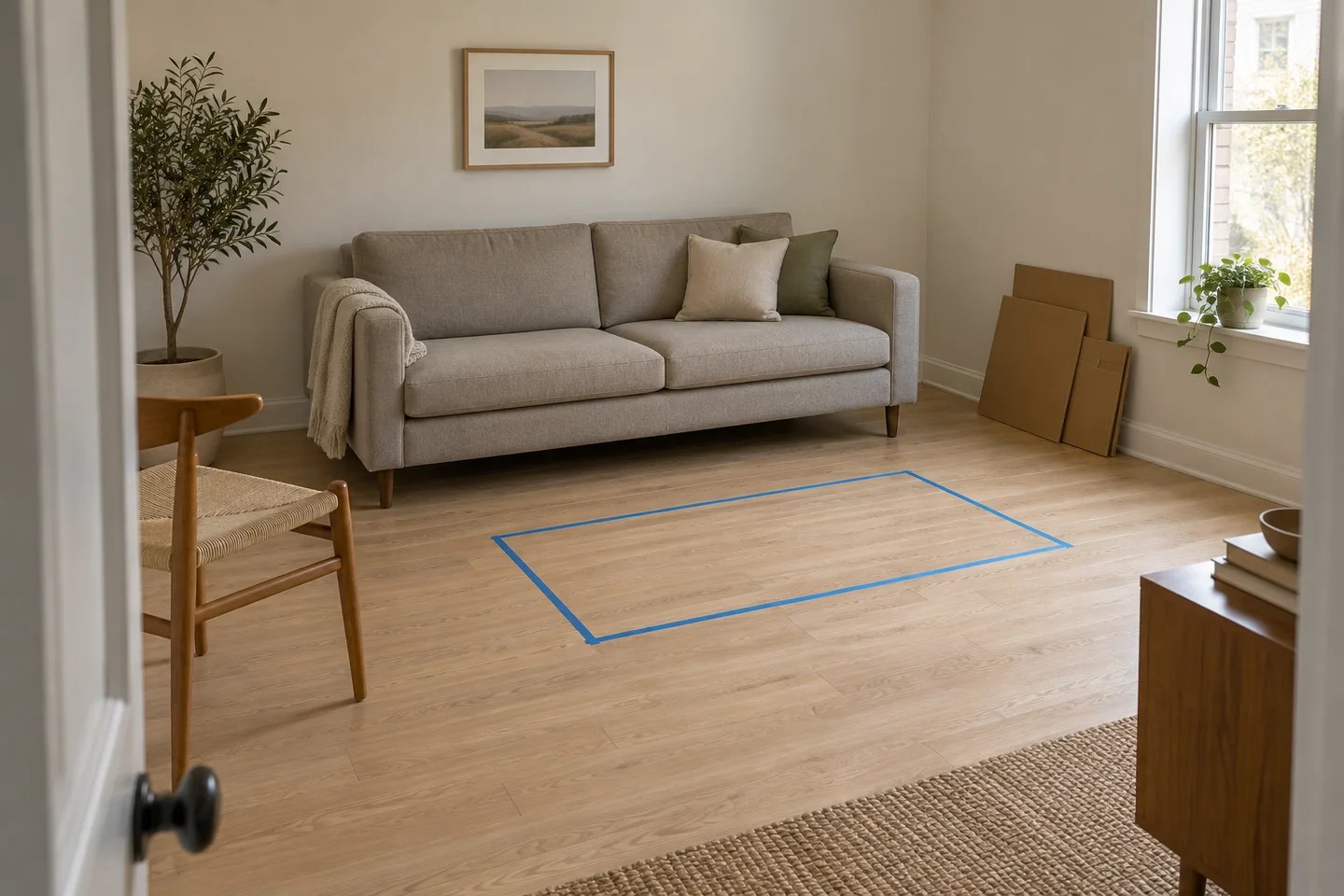
- Mark two possible footprints using temporary markers suitable for your floor.
- Sit in each seat, reach the table and walk through the room.
- Check the exact listed rug dimensions before ordering.
Measure the furniture group before the whole room
Sketch the furniture you intend to keep, including the full depth of the sofa, chair legs and any open storage. Then draw the area the rug would connect. In an open room, that may be one conversation group rather than every piece of furniture within sight. A rug does not have to fill the floor to have a clear job.
Write down two sets of dimensions: the footprint you would like to cover and the largest footprint that leaves your doors, storage and routes usable. These are your shopping boundaries. A standard rug size is a candidate to test against those boundaries, not a substitute for them.
The Valenne shortlist
Before the rug arrives.
Tape out the size on the floor. Once the rug is chosen, match the pad to both its dimensions and your flooring.

25 ft · model 33-725
Measure furniture, door openings and the route a new piece must travel before placing an order.
Before you choose This listing uses imperial markings; choose a metric version if you work in centimetres.
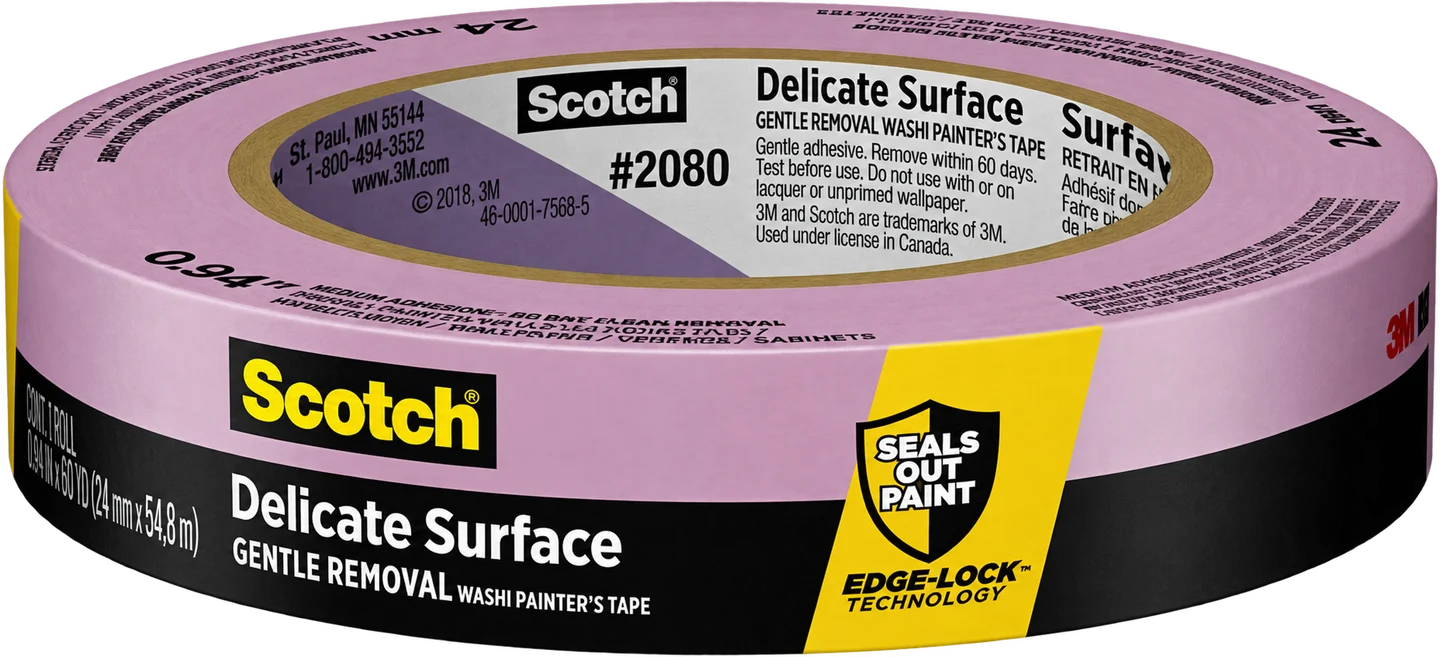
1 in wide · one roll
Mark a proposed furniture footprint or a paper artwork template before committing to the position.
Before you choose Patch-test first and follow the surface and removal instructions. Delicate-surface tape is not suitable for every finish.
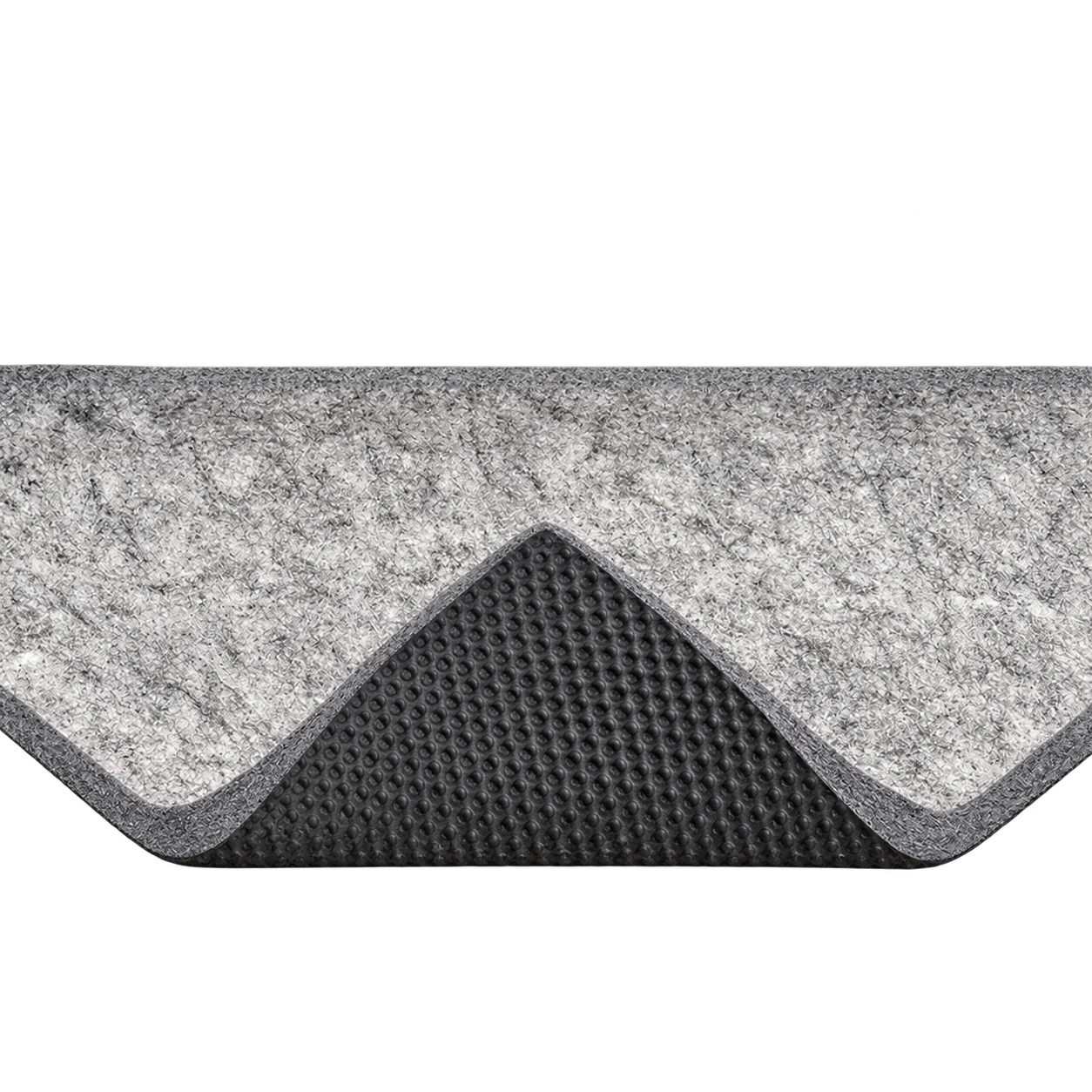
8 × 10 ft · ¼ in thick · felt and rubber
A felt-and-rubber layer adds cushioning beneath a rug while helping hold it in place.
Before you choose Choose the correct size and confirm compatibility with your floor manufacturer. Trim to sit inside the rug’s edge; this is a pad, not a rug.
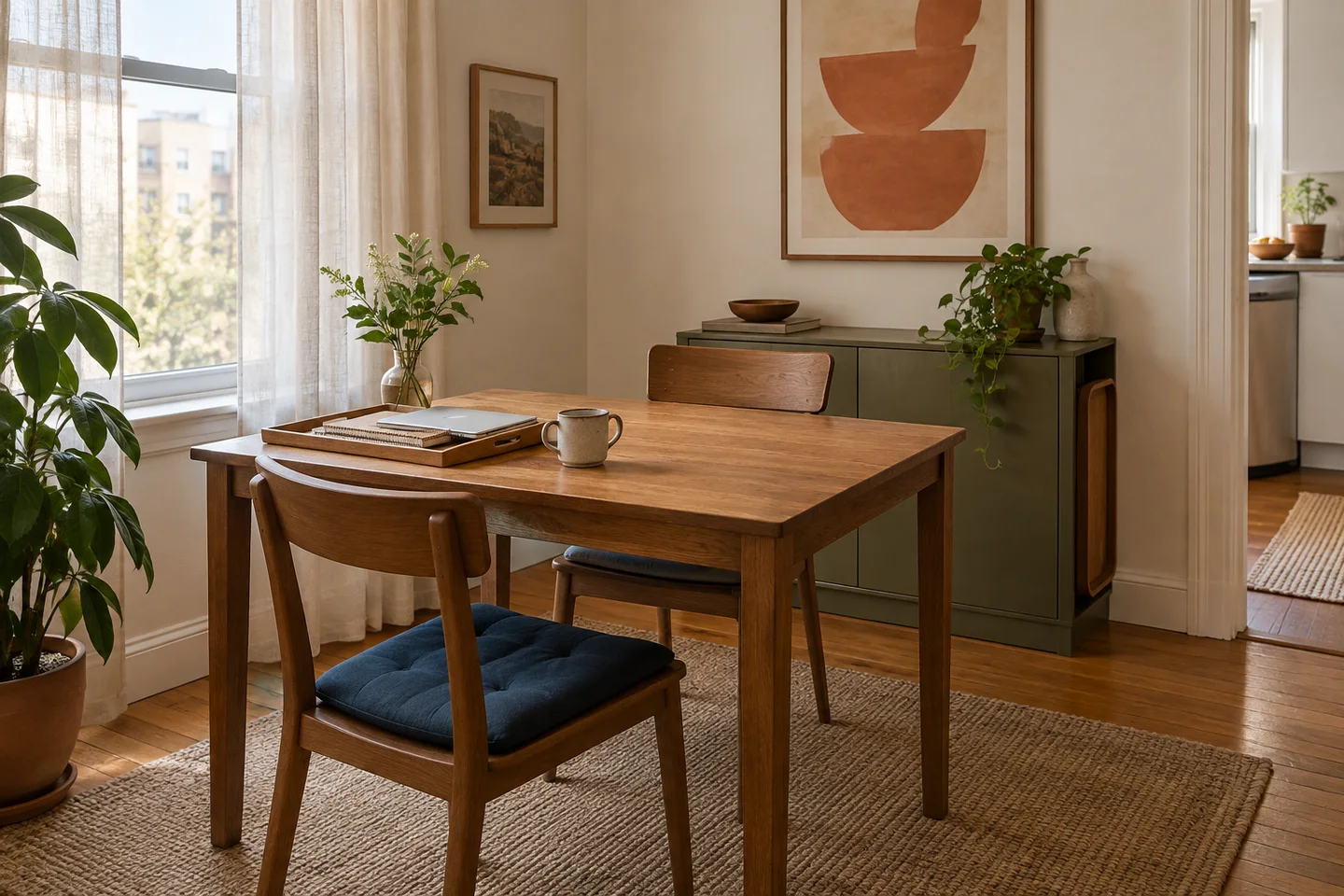
Under a dining table, measure chairs in motion
Pull out the chairs as you do when sitting down and getting up, then measure the outside of that working footprint. Include the chairs at the ends and test any table extension you regularly use. We would rather give the chairs enough room to move comfortably than choose a rug that looks balanced only when everything is tucked in.
If that footprint conflicts with a nearby cabinet or doorway, revisit the table position or consider leaving this area unrugged. A small rug that repeatedly catches a chair is a poor compromise. Low-profile construction is worth comparing here, but judge the rug and pad together, with the actual chair movement in mind.
Beside a bed, start where you stand
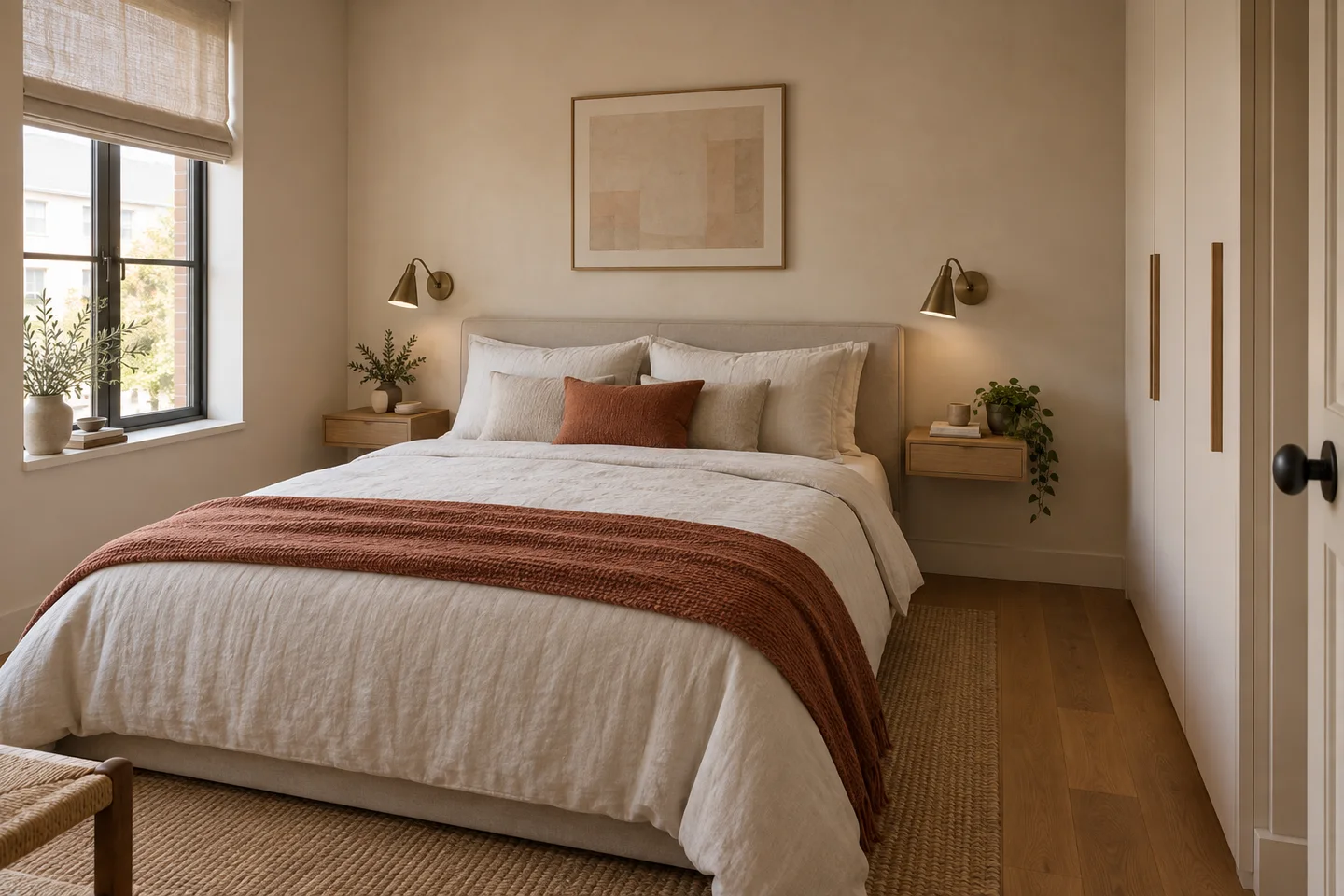
Mark where you put your feet when you get up and where you stand to dress. A large rug partly beneath the bed can connect those areas; separate bedside rugs can serve them with less material hidden under furniture. Choose based on the bed's position and the floor space you use, rather than the mattress size alone.
Open any under-bed drawers across the proposed area. Include the rug's pile and the pad when checking clearance. Keep a doorway and a wardrobe opening in the sketch, even if they sit outside the photograph you are using for inspiration.
Mock up the exact listed size
Use a measuring tape and temporary markers suitable for your floor to identify the corners of two candidates. Do not rely on a small sample to judge the footprint. Read the product's actual dimensions: a category name such as an 8-by-10 rug does not replace the dimensions of the selected variant.
Try one ordinary sequence in the marked layout: enter the room, sit, reach the table, open storage and leave. Photograph each option from the same doorway if comparing them helps. This is a placement exercise; it cannot tell you how a real edge, backing or pile will behave.
Check what sits beneath it
Before ordering a pad, check compatibility with both the rug and your floor manufacturer's instructions, including any heated floor. Add the pad's thickness to your door and drawer checks. Avoid assuming that a pad described as nonslip is suitable for every surface.
Keep the purchase note short: selected dimensions, intended furniture overlap, floor type, pad requirement and the care instructions you are willing to follow. If the right size is outside the budget, compare simpler materials or wait; the measuring work remains useful without a purchase.