Choose the finish you are working around
List the wood surfaces you can see: flooring, doors, trim, cabinets and furniture. Mark which will stay. Then choose one visible reference for your next decision. It might be a large dining table or the floor; it should be something the new piece will actually sit near, rather than a detail in a saved image.
We prefer to build around the pieces with the strongest presence. A fixed floor and an heirloom table can both belong in the starting palette; neither needs to be matched by every new purchase. Choose which part of the room needs attention, then use its existing wood as the reference for the next decision.
The Valenne shortlist
Let the materials differ.
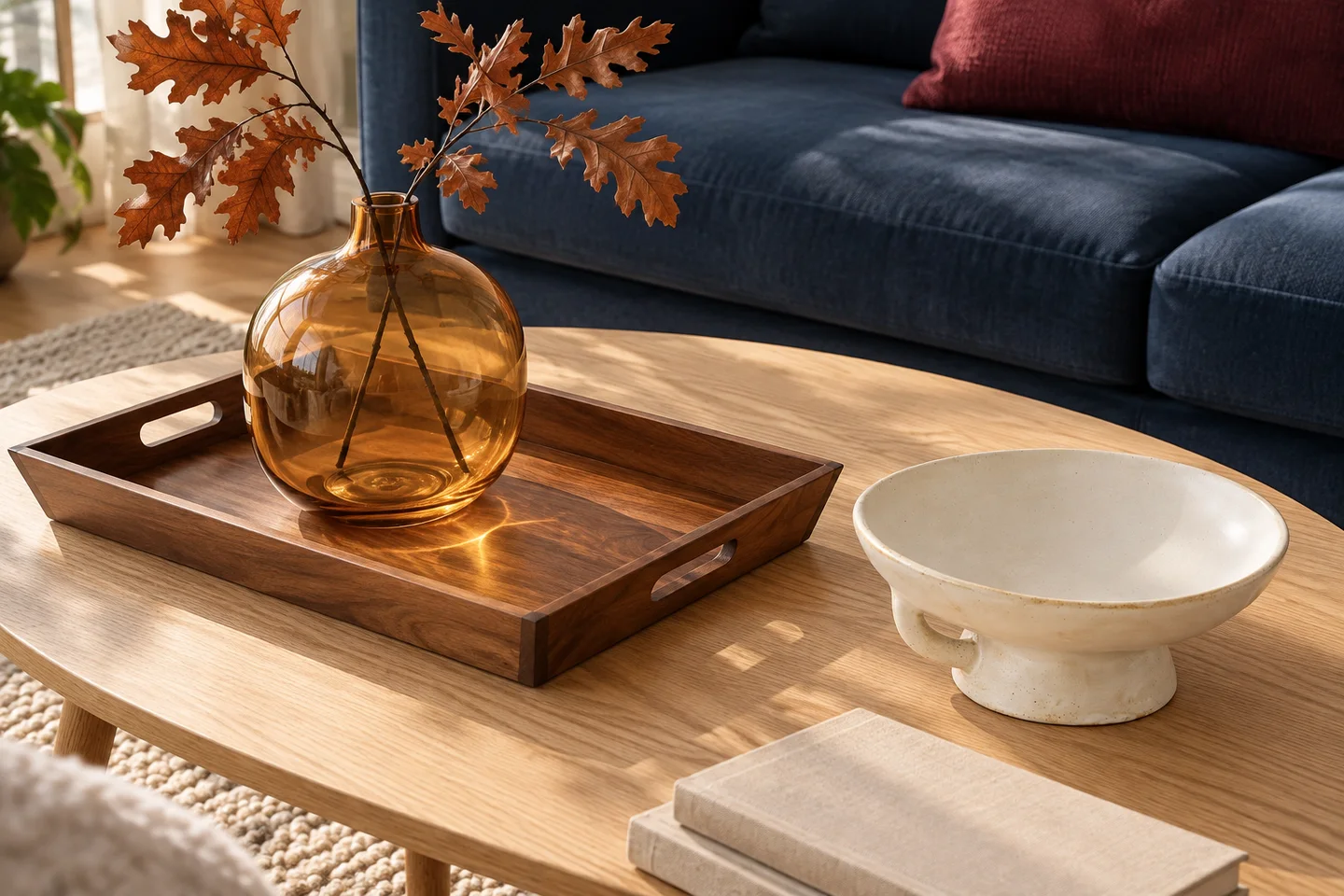
A lighter wood table, warm glass and a small metal accent can sit beside an existing darker piece.
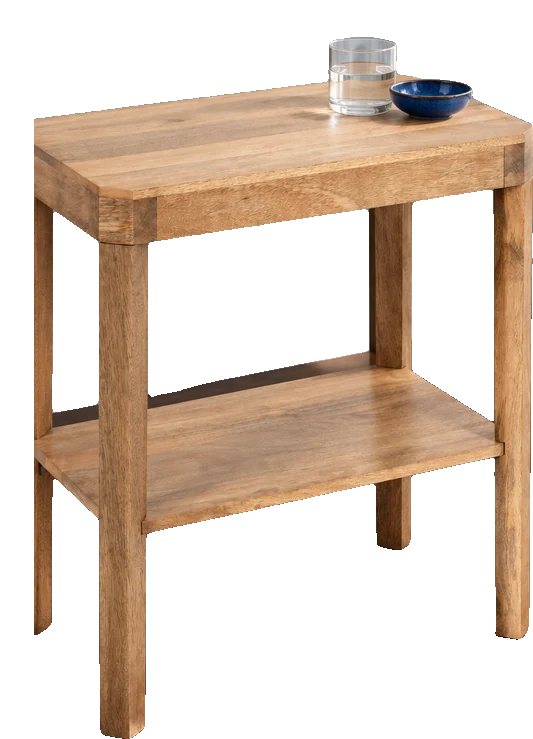
Natural; 22 x 14 x 26 inches
Two levels give a side table room for a book below and a drink above.
Before you choose Check the 22 × 14 in footprint and 26 in height against your sofa arm or mattress.
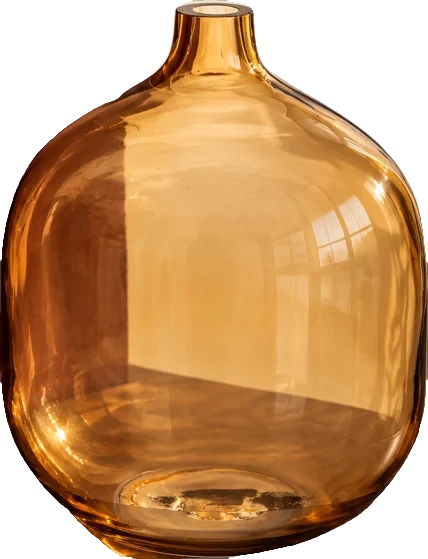
Amber; 7 inches diameter x 8.25 inches height
Amber glass repeats a warm accent while allowing light to pass through the arrangement.
Before you choose Check the opening and base against your stems and shelf depth; glass colour changes with the light.

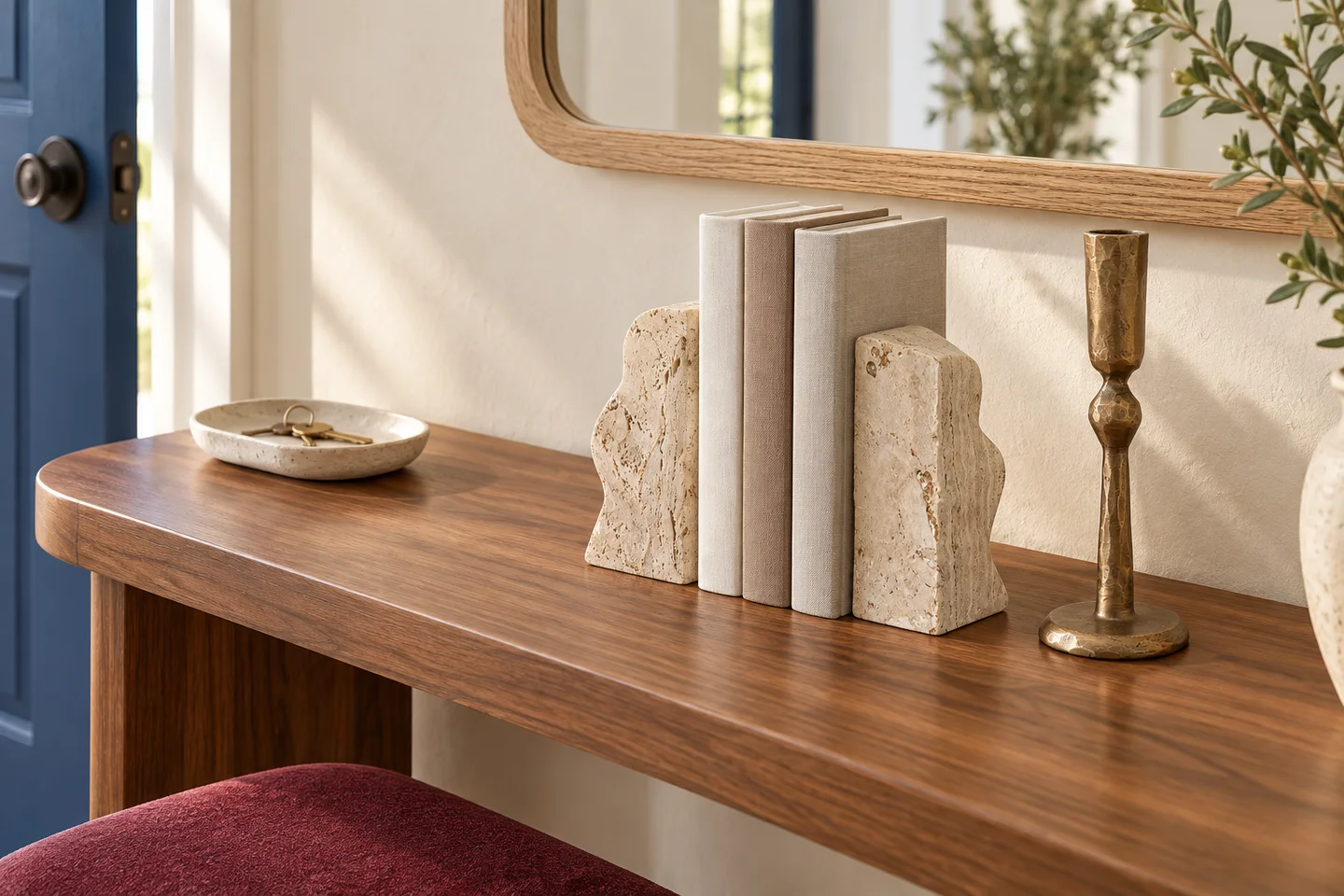
Antique-brass finish; 2.5 in diameter × 7 in tall
A slim antique-brass-finish holder introduces a little metal beside wood or coloured glass.
Before you choose Check taper fit and use a stable, heat-safe surface away from fabric and shelves.
Separate lightness from undertone
First ask whether a finish looks light, medium or dark beside your reference. Then ask what color you notice within it: perhaps honey, reddish brown or gray. This is a practical comparison, not a test with one correct label. If two samples seem hard to distinguish, view them next to the piece they will accompany.
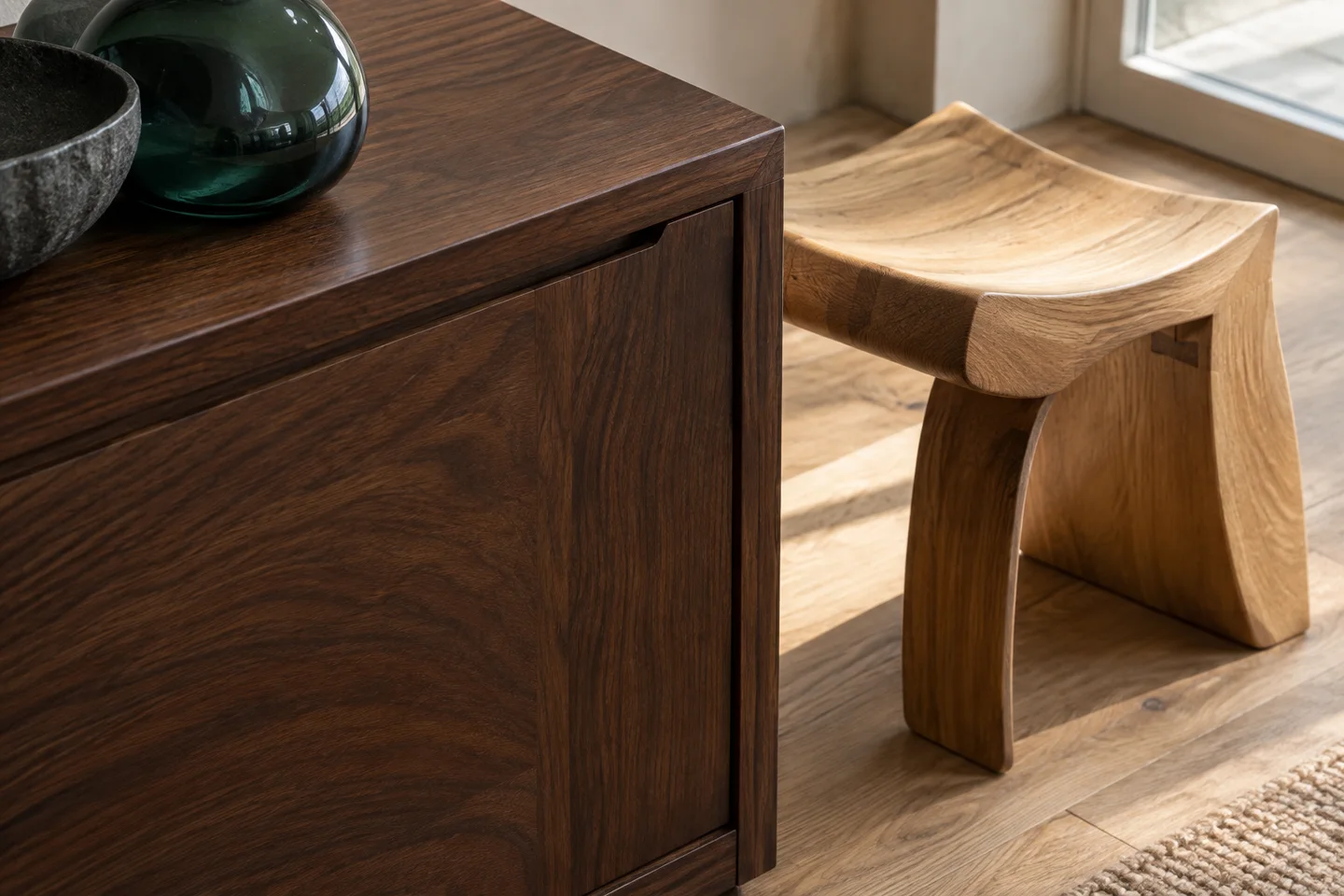
For a quiet palette, we favor a shared warmth across different woods while allowing their lightness to vary. Pale honey oak and a deeper warm brown can feel connected without looking like a set. Compare the actual finishes side by side: the species name alone tells you little about how a treated surface will look in the room.
A light natural mango-wood side table can provide that contrast beside a darker floor or cabinet. The Talcott selection below is 22 inches wide, 14 inches deep and 26 inches high: compare the tabletop with the arm of the seat it will serve, and leave room to reach its lower shelf.
Test a contrast instead of a near match
If you cannot find a convincing match for a table you own, compare an intentionally lighter or darker companion. For example, set a pale chair sample beside the dark table reference and ask whether you like that difference. This is a styling option, not a rule that every room needs opposing colors.
Keep the comparison focused. Change the proposed chair finish while holding the rug and wall color constant. If every candidate brings a new palette, it becomes difficult to tell whether you prefer the wood itself or the photograph around it. Eliminate a finish because it fails your room comparison, not because it differs from the table.
Repeat a detail before adding another finish
Carry a wood color into a second part of the room with a frame, tray or small table. We use these smaller echoes to make a strong finish feel deliberate. Keep some distance between them so the connection travels across the space rather than collecting on a single surface.
You are looking for a useful visual connection, not filling a quota. An important single piece can remain a single piece. If the room already contains several busy surfaces, compare a quieter painted, upholstered or metal object instead of adding another wood finish. Buying more wood is not the only way to make existing woods work together.
Compare samples where the furniture will live
Request a finish sample when the seller offers one, and check its cost and return conditions. Place it beside the fixed surface rather than inspecting it in isolation. Look once in daylight and again under the evening lamps you normally use. Screens and product photography are useful for narrowing a list, but they cannot show the finish under your own room's light.
Write a simple observation for each candidate: too close to the table but different in color; a contrast I like; or a finish that works with the floor. Keep the original sample label so the chosen name and variant do not get lost. A sample helps with the finish decision; it does not establish the whole piece's build quality.
Check construction after choosing the look
Read what the listing says the object is made from. A color called walnut is not, by itself, a statement that the piece is solid walnut. Distinguish the named finish from any stated wood, veneer, engineered material or other construction, and leave an unanswered detail unanswered until the seller clarifies it.
Then return to the practical brief: dimensions, how the piece opens, its intended use and the care requirements. Keep a candidate only if both its appearance and function fit. Your final note should identify the existing piece it relates to, the selected finish and the actual product variant, without claiming it is an exact match.