Aalto, Korhonen and a piece of birch
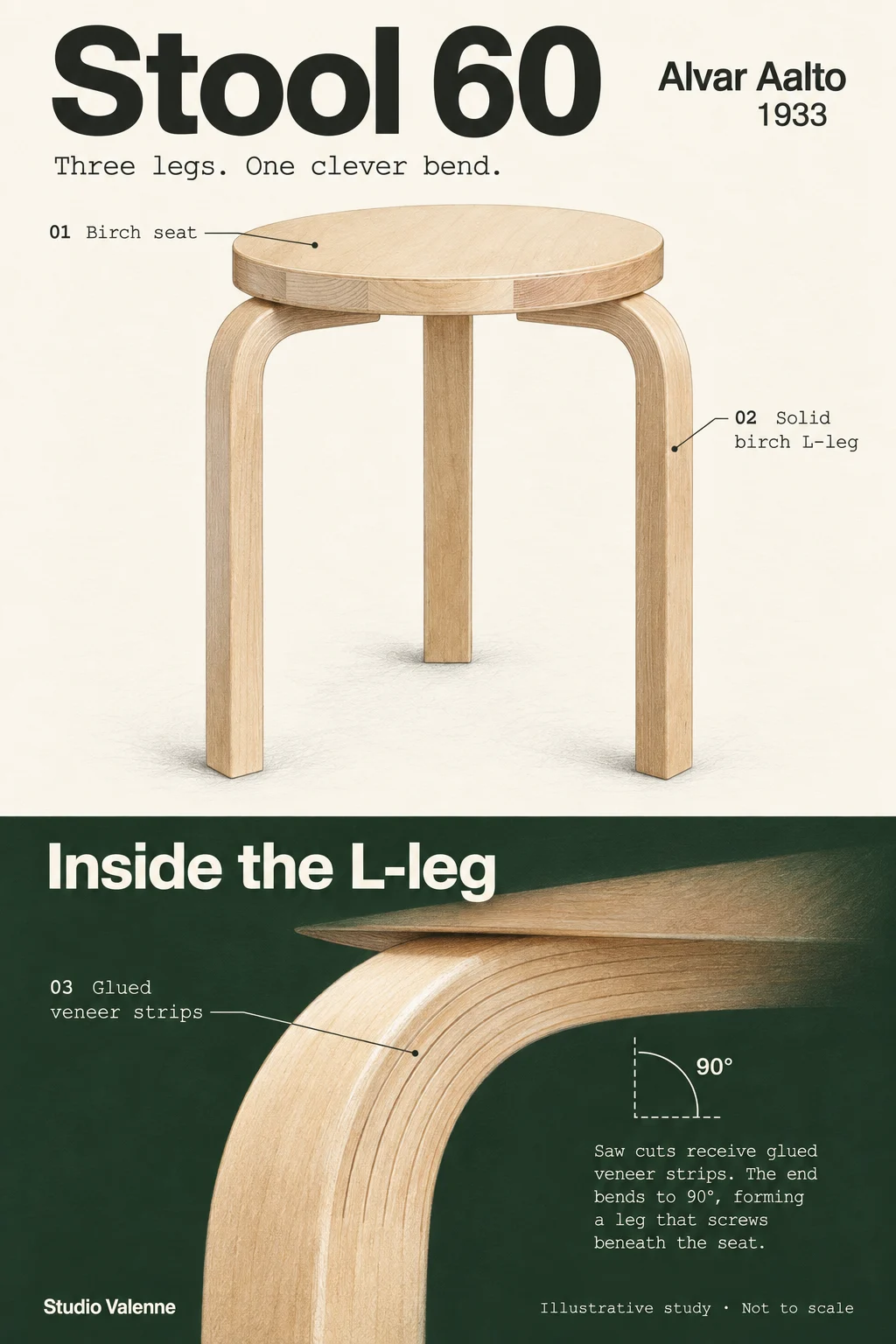
In the late 1920s, Alvar Aalto began experimenting with wood alongside furniture maker Otto Korhonen. Their work led to a solid birch leg whose upper end could be bent into an L. Aalto patented the L-leg in 1933, the year he designed Stool 60.
That short horizontal end changed how the furniture could be assembled. Instead of relying on a separate frame beneath the seat, the leg could be screwed directly to it. The same idea became the starting point for a family of stools, chairs and tables.
What happens inside the bend
The process begins with saw cuts in one end of a straight birch blank. Thin wooden veneer strips are glued into those cuts. Heat and steam help the upper end bend through 90 degrees, while the glued inserts help the curve hold its form.
Follow the leg from the floor to the seat: the straight section remains solid birch, then curves into the short arm fixed beneath the seat. Our enlarged drawing shows that principle. It is an illustration of the method, rather than a measured manufacturing section.
Three legs, then a stack
Stool 60 has three legs. Turn one stool slightly as you place it above another and the legs pass beside each other, building a spiral stack. Aalto used the stools as extra seating in the lecture hall of the Viipuri Library, built in 1933–35.
The clear birch finish makes the grain easy to follow, but Stool 60 also comes with other seat finishes. Current seat construction varies by version; the legs are solid birch. The four-legged stool with a similar outline has a different name: E60.
Seen from above, the stool is almost just a circle. Seen from below, the three bends explain how so few parts fit together.
The reading shelf
Study the bend in context.
These references offer a wider view of chair design and everyday objects alongside the Aalto story.
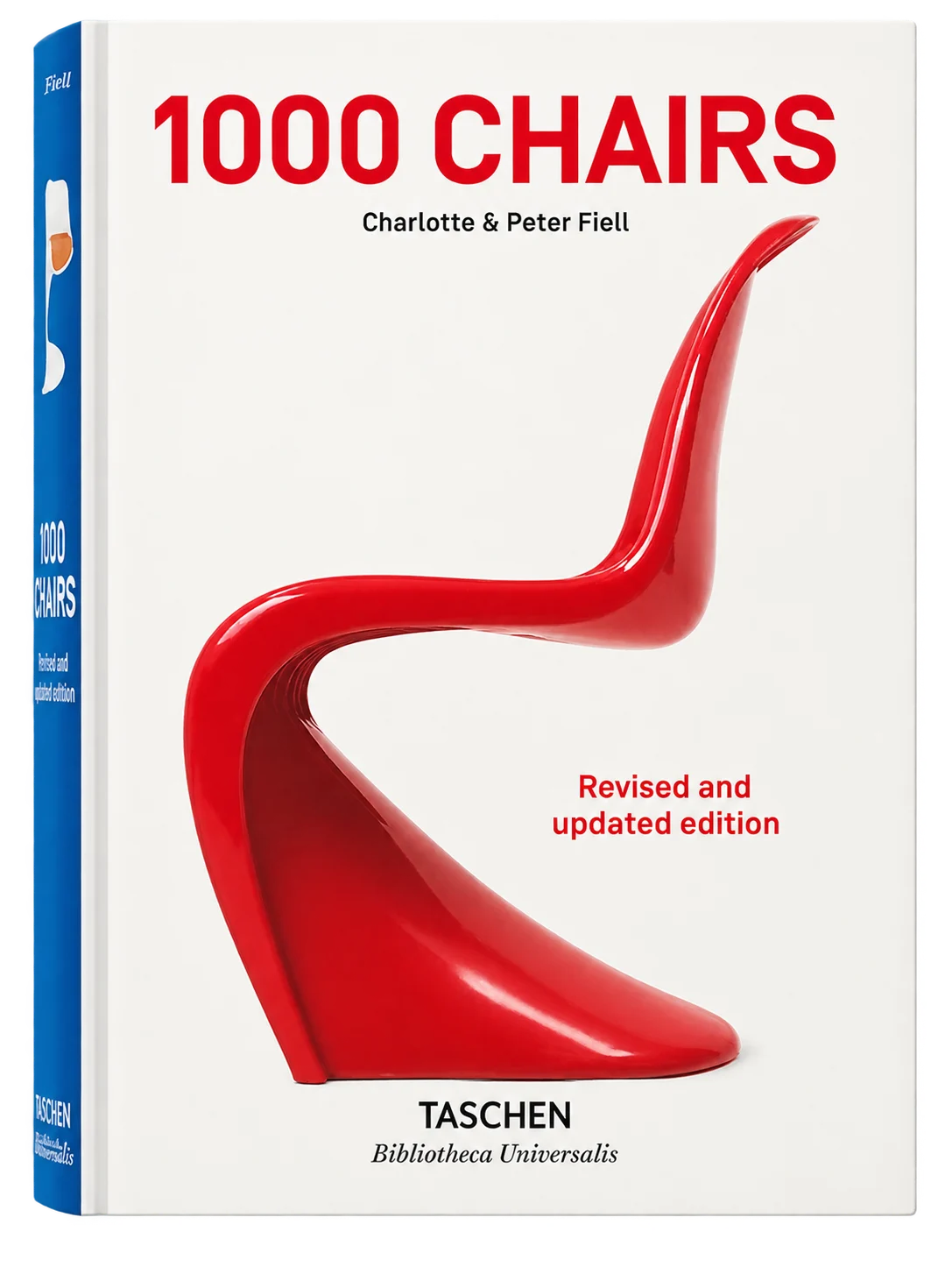
Charlotte & Peter Fiell · TASCHEN · hardcover
A compact illustrated reference for comparing chair forms, materials and the designers behind them.
Before you choose Choose the revised multilingual edition and check the seller and condition.
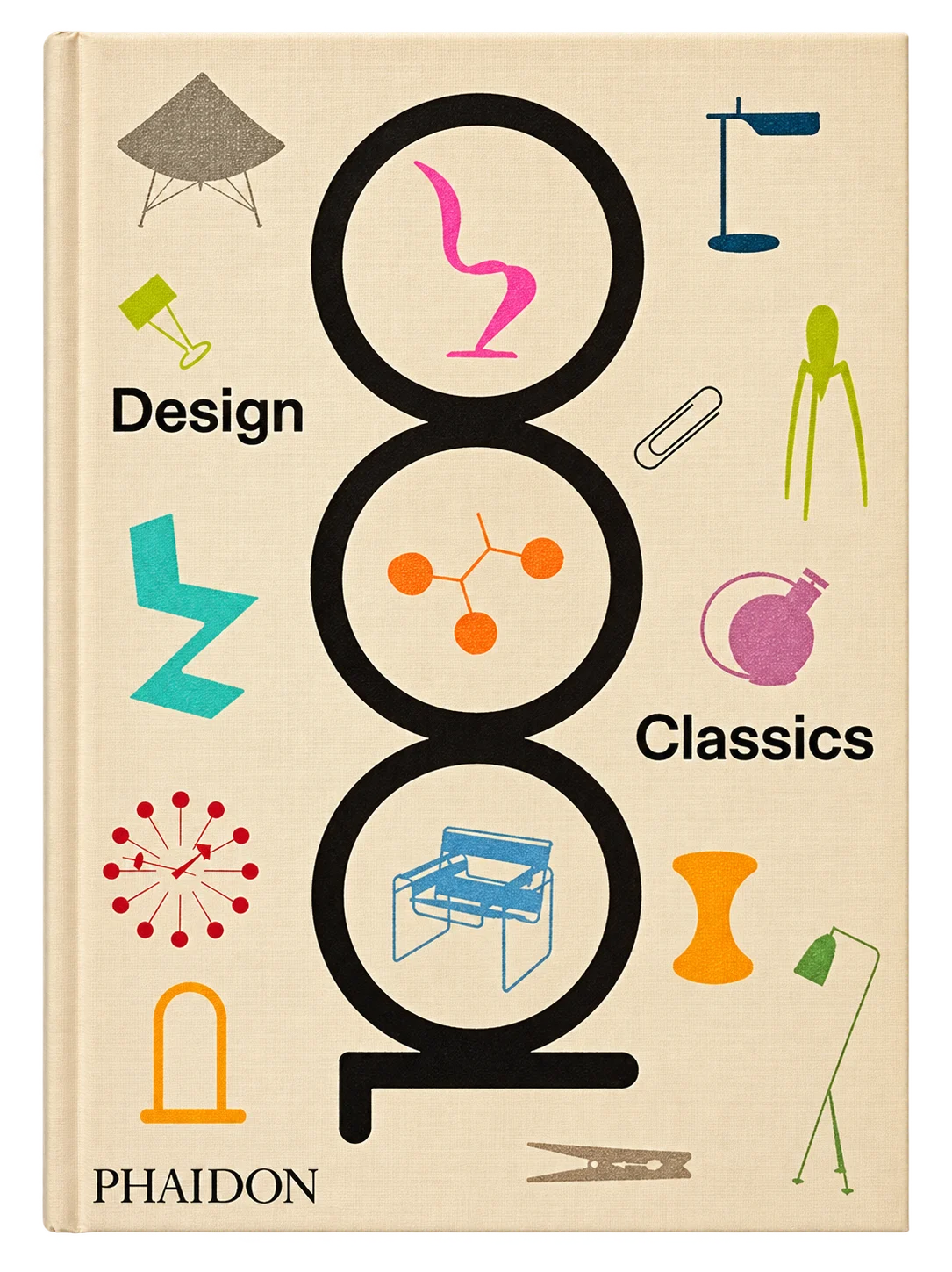
Phaidon Editors · Phaidon · hardcover
A broad visual reference that puts furniture, lighting and everyday objects in the same design history.
Before you choose A large-format reference book. Check the 2022 English-language edition and its dimensions.
Sources & editorial notes
Artek — Stool 60 · Checked 2026-09-13Artek — L-leg collection · Checked 2026-09-13Alvar Aalto Foundation — Stool 60 · Checked 2026-09-13Practical suggestions are editorial judgments; adapt them to your needs. No personal product testing is claimed.