Marcel Breuer and the S 64
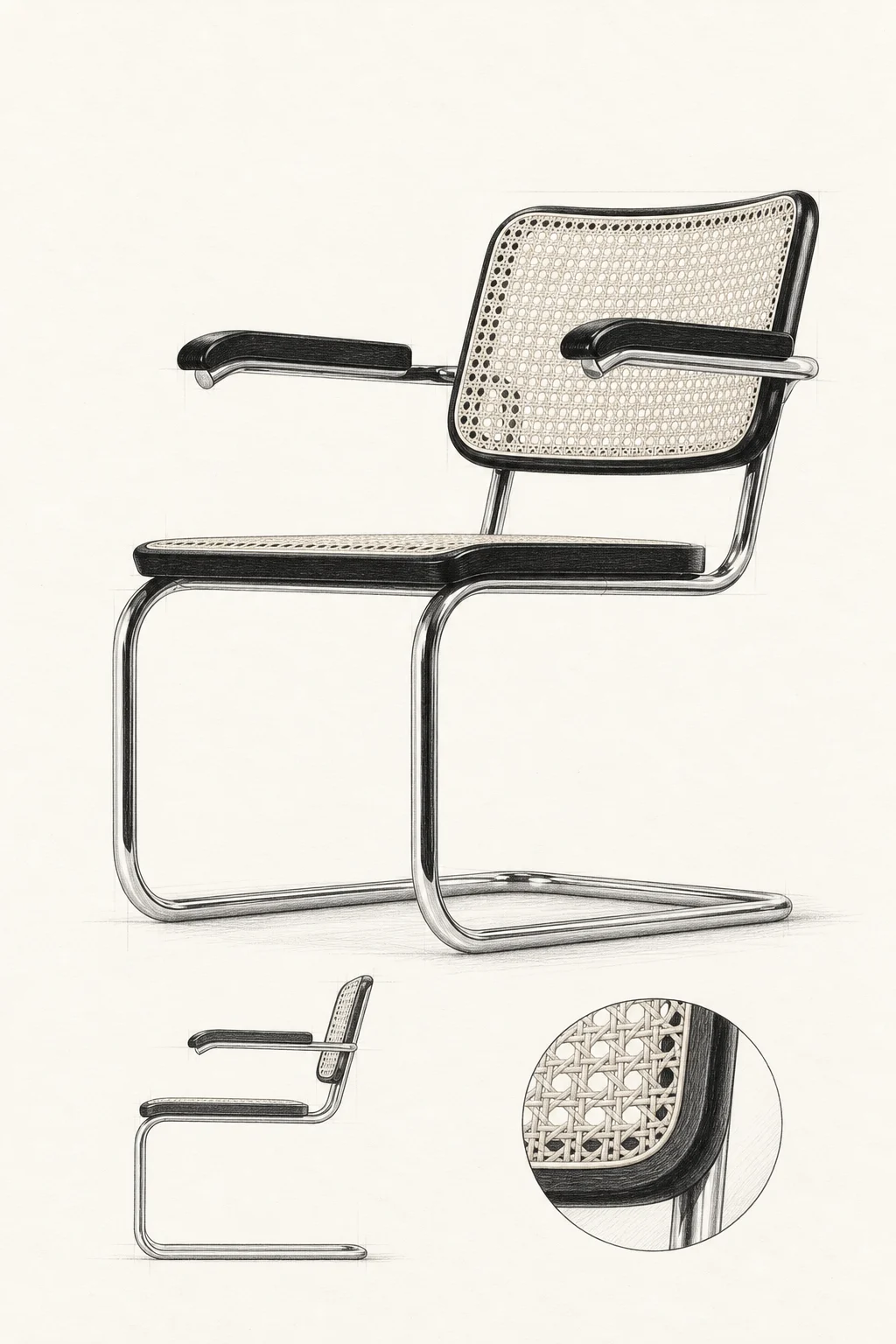
Marcel Breuer trained at the Bauhaus and later led its furniture workshop. His experiments with tubular steel helped change the shape of the modern chair. In the S 64, the frame bends beneath the seat and returns along the floor, leaving the back of the seat without a pair of rear legs.
The familiar cane version combines that steel frame with bentwood seat and back frames and wooden armrests. Look at the meeting points: the light canework sits inside solid wood, while the steel carries the whole structure. Thonet has produced the design since 1930. The company credits Breuer as its designer and Mart Stam with the artistic copyright for the cantilever principle.
Our study follows the cane S 64 V. The S 64 N uses synthetic mesh, so the names should not be treated as interchangeable. Thonet lists the current S 64 V at 58 cm wide, 60 cm deep and 82 cm high, with a 45 cm seat height.
Verner Panton and the Flowerpot series
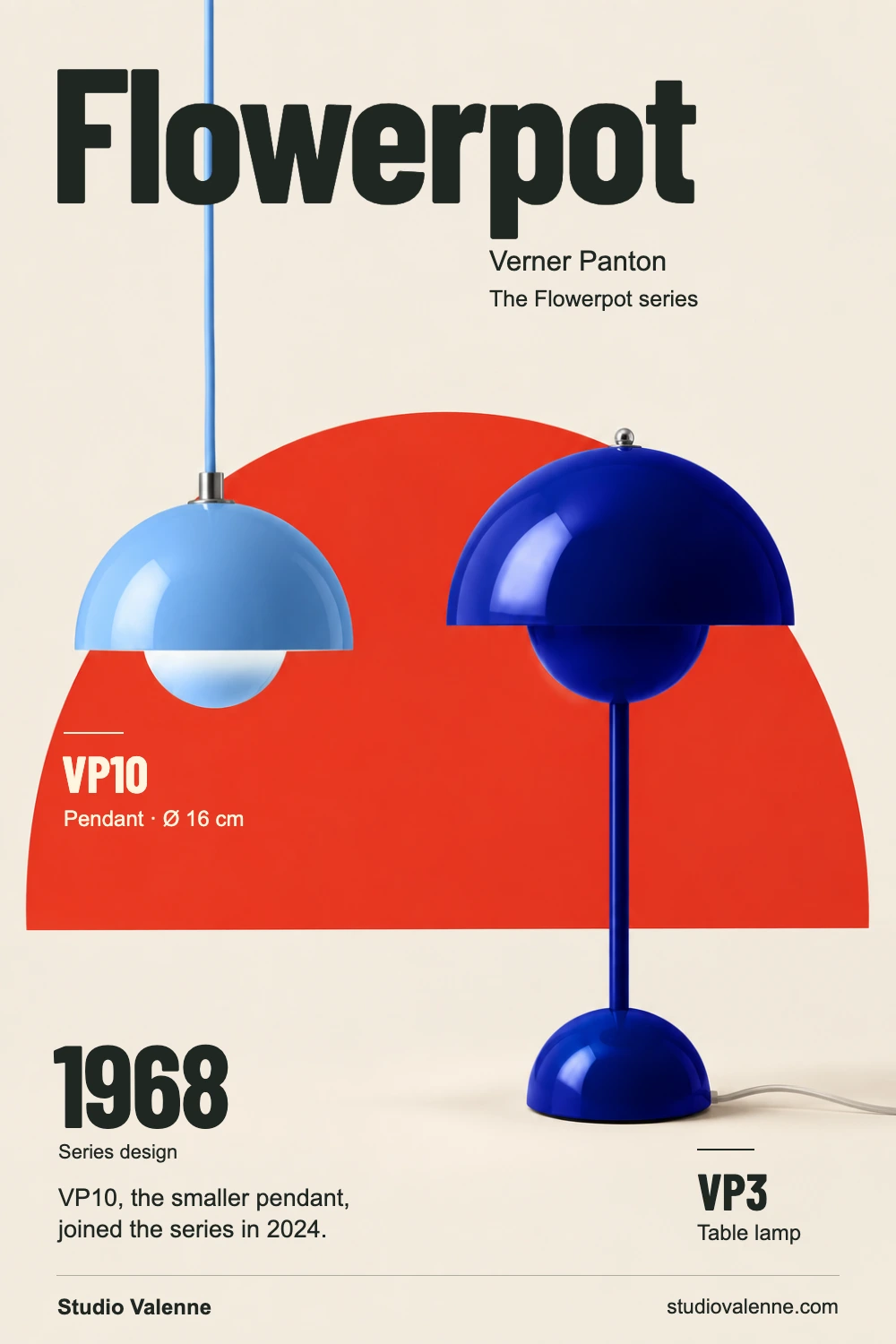
Verner Panton trained as an architect in Copenhagen and worked in Arne Jacobsen’s studio before developing furniture, lighting, textiles and interiors of his own. Strong color and rounded forms run through his work. The Flowerpot series, designed in 1968, puts those interests into a compact shape.
A larger rounded shade covers a smaller bowl below. The VP3 table lamp adds a slender stem and domed foot; its shade is 23 cm across and the lamp stands 50 cm high. In the pendant, the same family resemblance is visible without a base or stem.
The smaller VP10 pendant joined the series in 2024. Its 16 cm shade makes it useful on its own or in a group. That is a later introduction within Panton’s original Flowerpot family: 1968 is the series design date, not the release date of every model.
Mies van der Rohe and the Barcelona Chair
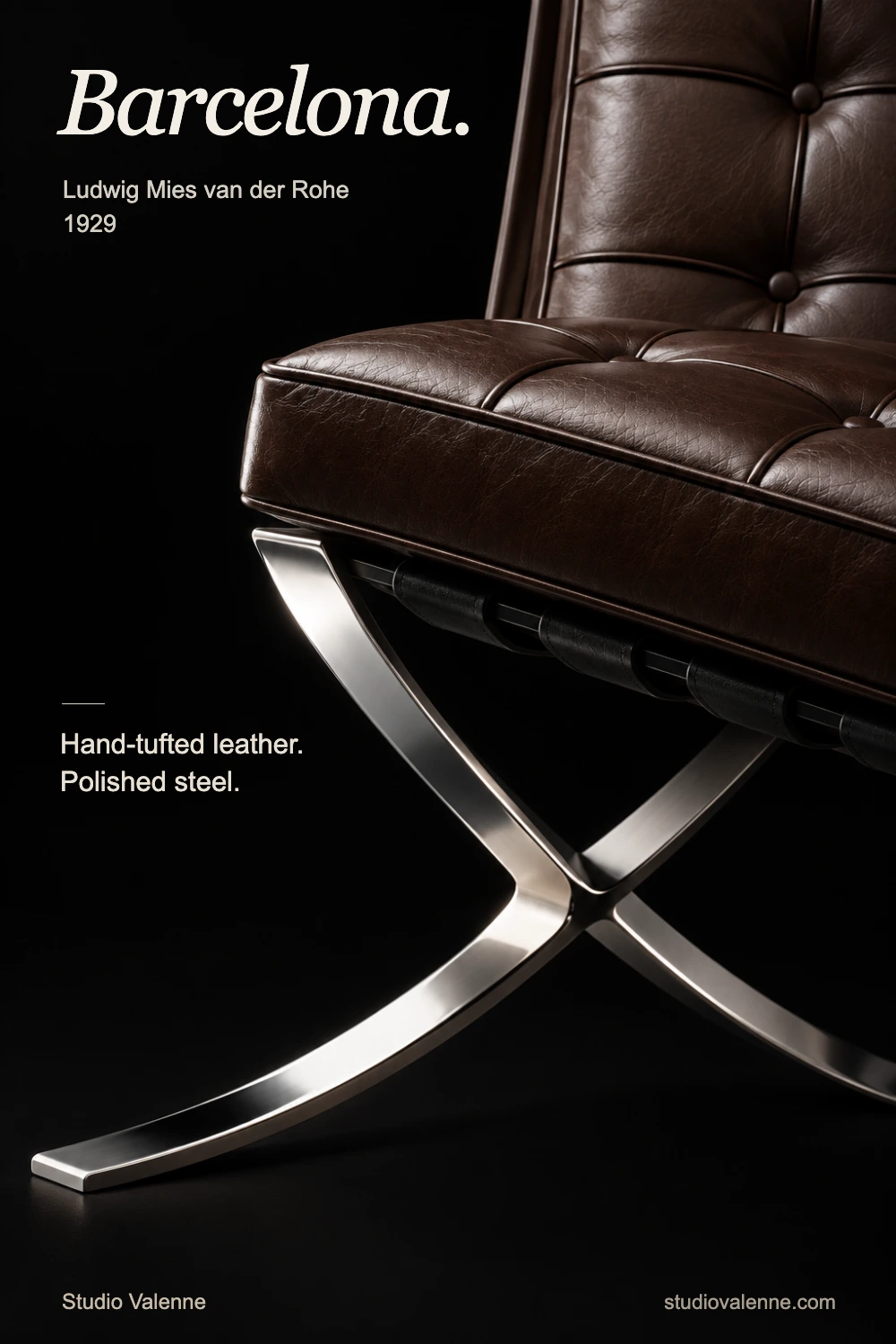
Ludwig Mies van der Rohe designed the Barcelona Chair for the German Pavilion at the 1929 International Exposition in Barcelona. Its low seat and angled back sit above two curved steel supports that cross at the sides. Knoll received production rights in 1953.
The frame is made from flat steel sections, rather than round tubing. In a close crop, its polished edge becomes a bright line beneath the dark cushions. The leather panels are individually cut, welted and button-tufted, with leather straps supporting the upholstery.
The chair is often recognized by its outline. Looking closer explains why the materials matter: the frame bends in a long, smooth curve, while the cushions break the surface into smaller repeated squares.
The reading shelf
A small design reference shelf.
Follow the chair and lighting stories through two illustrated surveys of the objects and their makers.
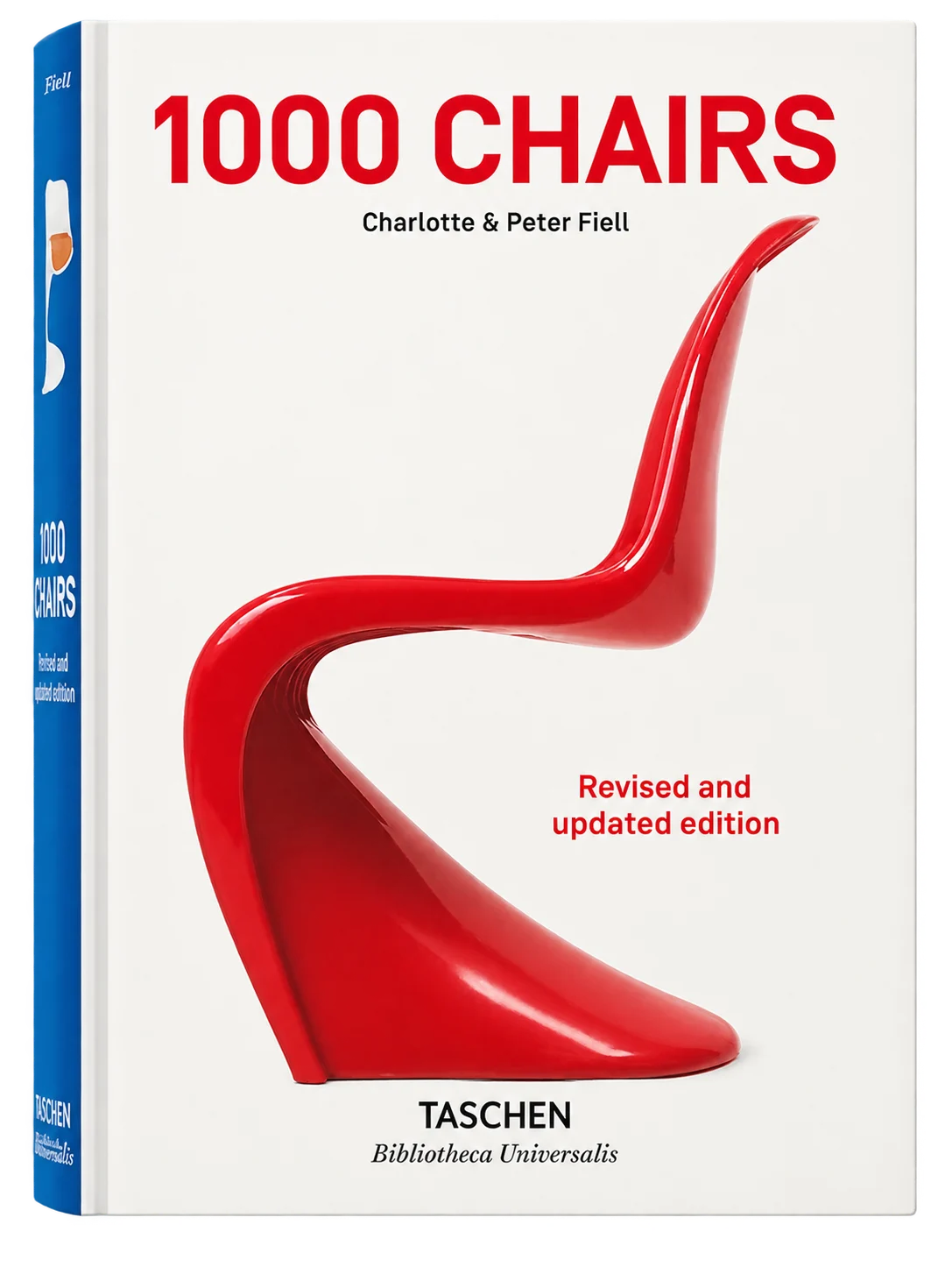
Charlotte & Peter Fiell · TASCHEN · hardcover
A compact illustrated reference for comparing chair forms, materials and the designers behind them.
Before you choose Choose the revised multilingual edition and check the seller and condition.
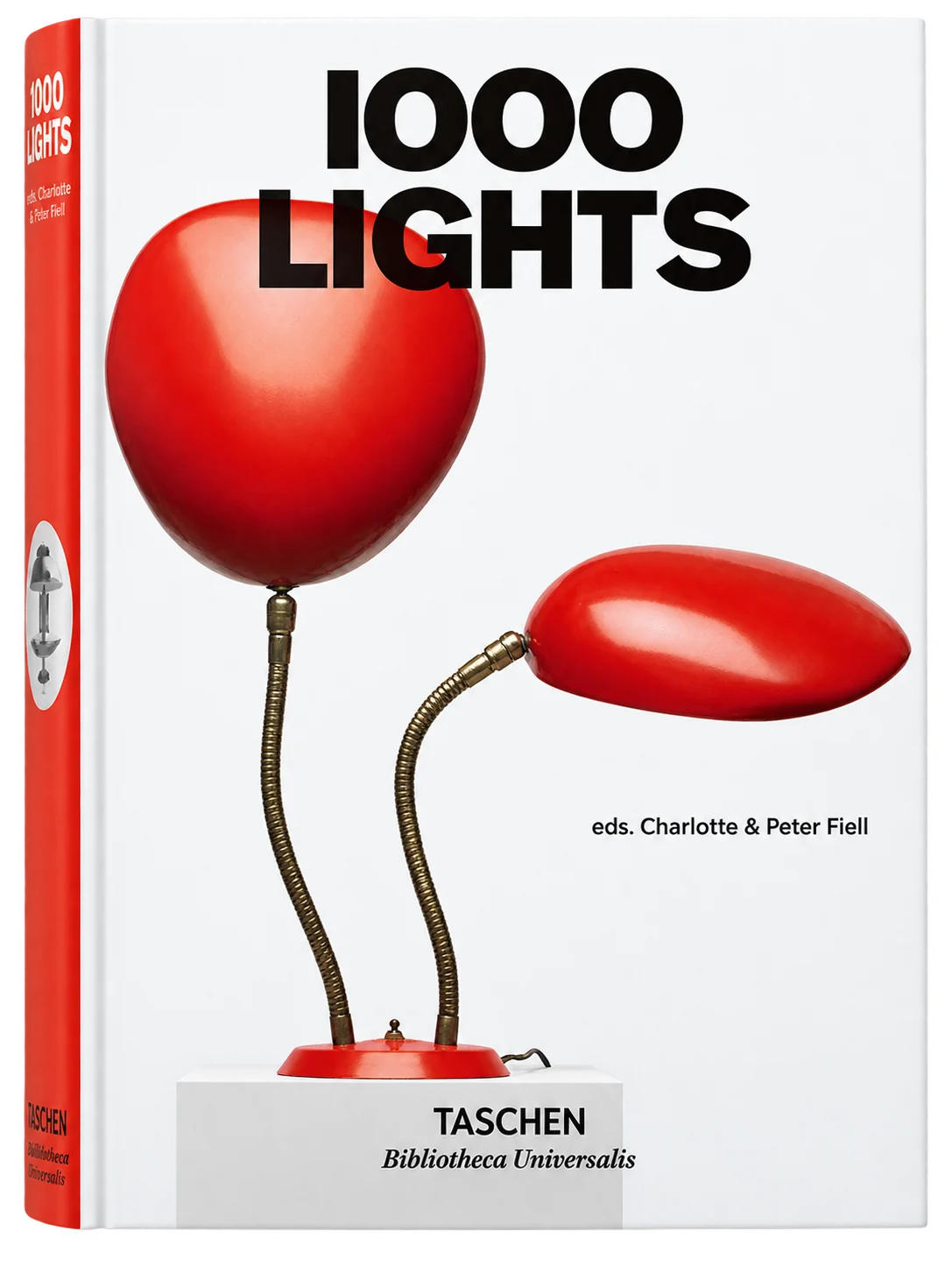
Charlotte & Peter Fiell · TASCHEN · hardcover
A chronological collection of lighting design, useful for comparing shades, bases and silhouettes.
Before you choose Choose the multilingual Bibliotheca Universalis edition; check the format and seller.
Sources & editorial notes
Thonet: S 64 V · Checked 2026-09-13&Tradition: Flowerpot VP3 fact sheet · Checked 2026-09-13&Tradition: Flowerpot VP10 press release, February 2024 · Checked 2026-09-13Knoll: Barcelona Chair · Checked 2026-09-13Practical suggestions are editorial judgments; adapt them to your needs. No personal product testing is claimed.