Give each side a job
Choose two activities that benefit from a visible boundary: working and relaxing, dressing and sleeping, or reading and moving through a larger room. The curtain should make the daily change easier.
In this example, a mustard curtain screens a blue work nook from a dark plum salon. The continuous wood floor keeps the spaces connected; the fabric lets the desk become less visible after work.
Plan the open position first
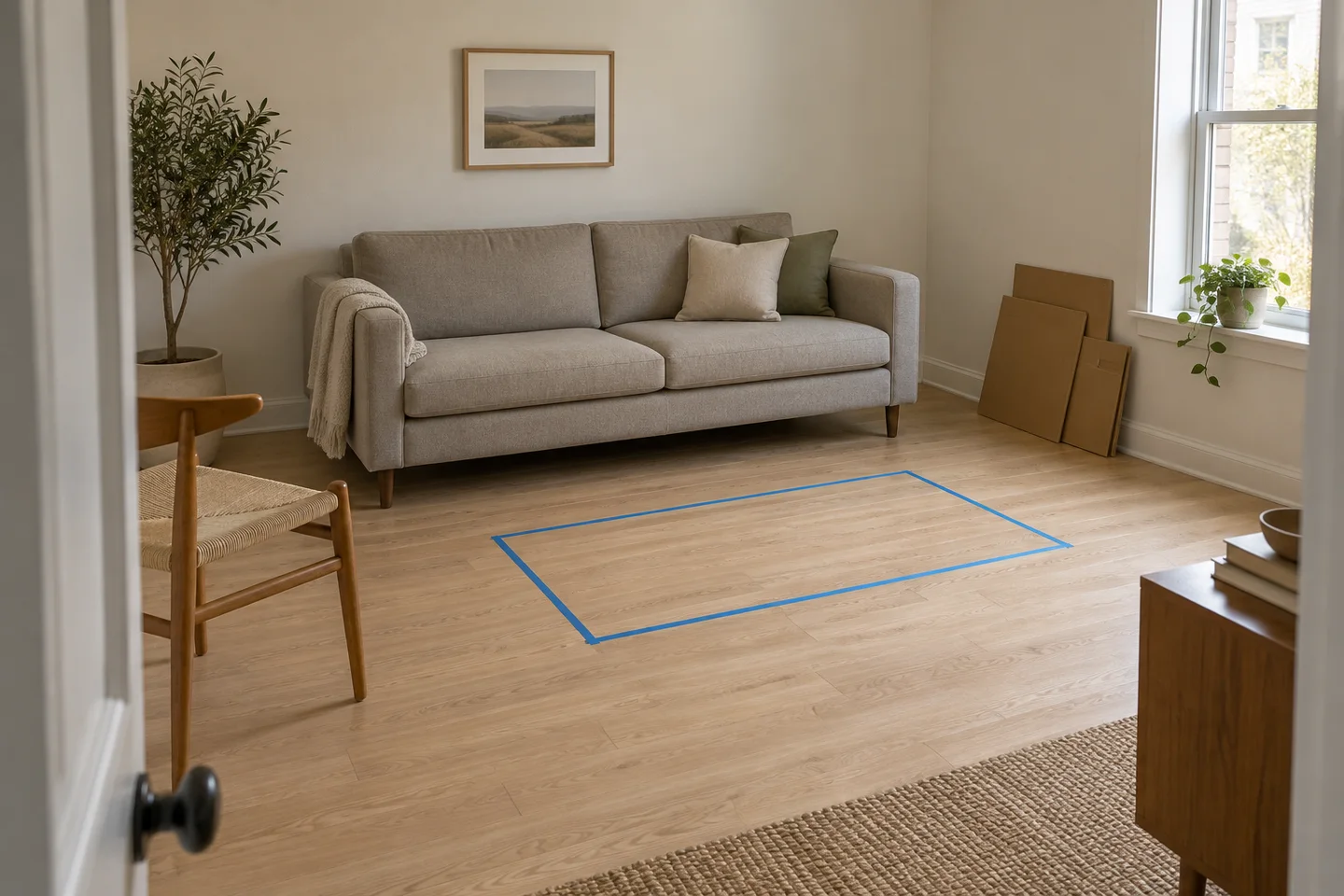
A drawn-back curtain still takes up room. Decide where the gathered fabric will sit and check that it will not cover a switch, obstruct storage or sit in the route through the room.
Mark the proposed opening and fabric stack on your plan. Walk through with a chair pulled out and cupboard doors open. If you have to push through fabric to use the room, change the position before buying the curtain.
The Valenne shortlist
Start with the support and the span.
Measure the room and the space where the curtain will gather. Check the support’s limits before selecting fabric.
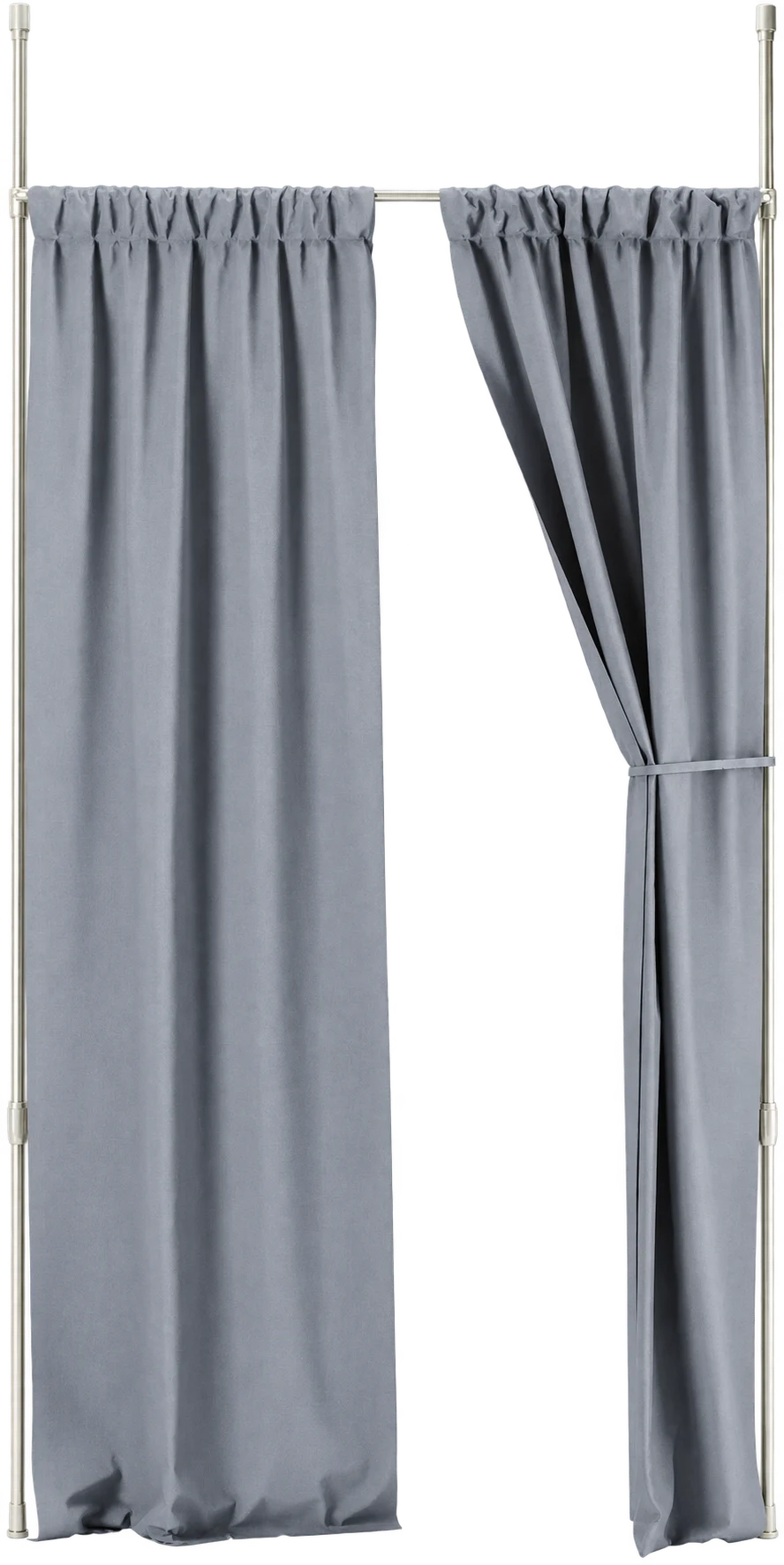
Nickel · expandable tension-mounted curtain support
A floor-to-ceiling curtain support can divide two uses of a room without a permanent partition.
Before you choose Check the height, span, ceiling suitability and curtain load. Curtains are a separate purchase; do not use it as a safety barrier.

25 ft · model 33-725
Measure furniture, door openings and the route a new piece must travel before placing an order.
Before you choose This listing uses imperial markings; choose a metric version if you work in centimetres.
Choose what the fabric should hide
A translucent fabric softens a boundary while keeping a view through it. A denser fabric can screen a desk or dressing area more completely. Hold up a sample in the room to see how it looks with a light switched on behind it.
The heavy folds in the poster are part of the visual idea. Do not assume any curtain will provide the privacy or sound separation of a wall. Decide how much separation you actually need before choosing it.
Check the rail and the light together
Confirm the proposed fixing surface and the combined weight of the curtain and hardware against the rail manufacturer’s installation requirements. Use suitable fixing advice for the actual wall or ceiling.
Keep the curtain clear of heaters and follow the clearances required by nearby equipment. Check both spaces in daylight and after dark: a divider that looks good in the evening may leave a desk too dim during the day.
Use color as part of the boundary
The ochre curtain stands out against plum and blue because it is a large, simple block of warm color. A curtain closer to the wall color would make the boundary quieter.
Try the actual fabric beside the wall finish. Look at its folds as well as a flat sample; highlights and shadows can change how strong the color feels.