Leave one useful gap
Choose the busiest shelf and take a few objects off. Keep the books easy to reach, then return one object with a different outline. View it from your usual seat before adding anything else.
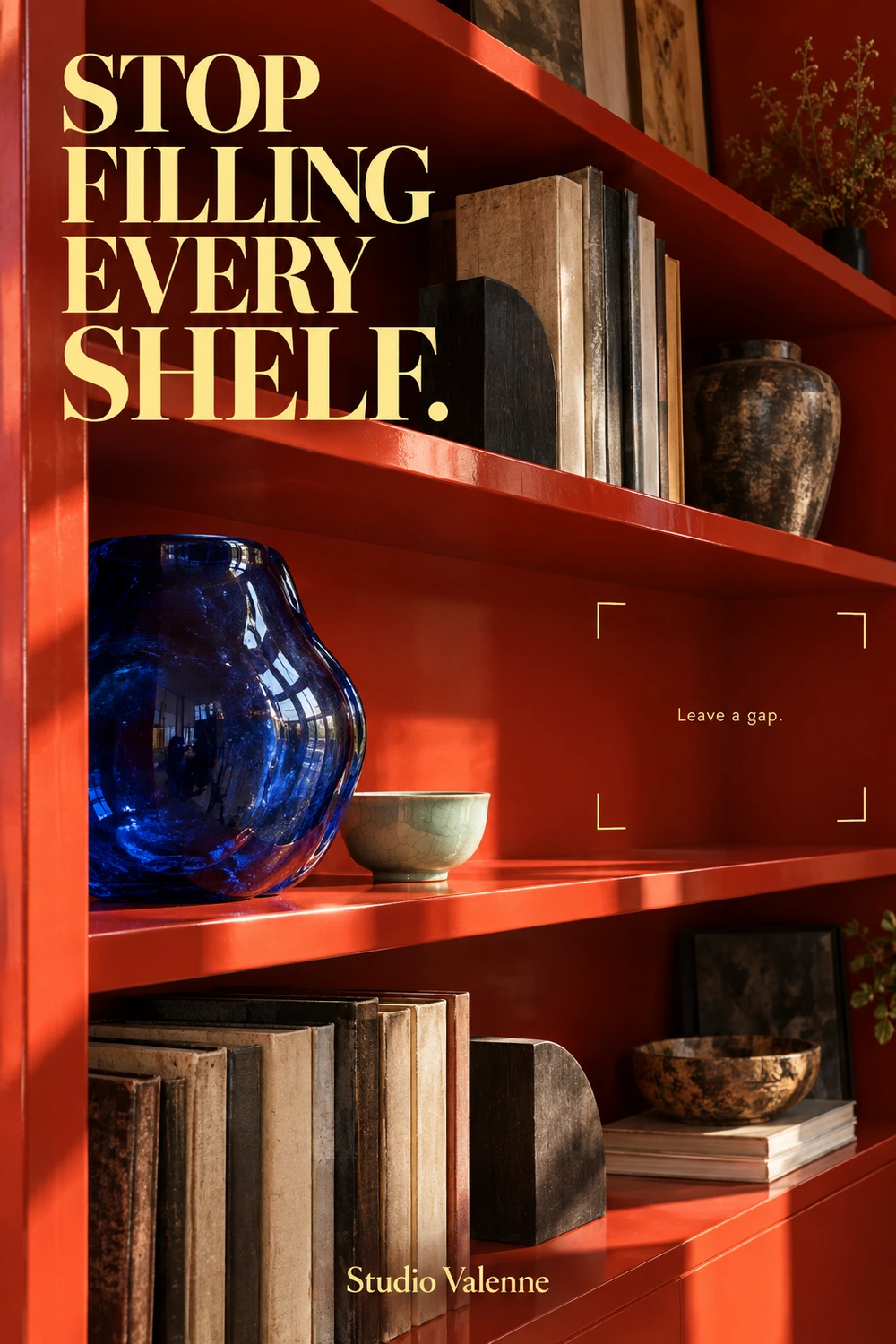
The empty area beside the blue vase and pale bowl in this example is doing a job: it keeps their outlines clear. You do not need the same amount of space on every shelf, or a fixed percentage left empty. A full row of useful books can sit beside a quieter display.
- Leave enough space to pull a book out without dismantling the display.
- Repeat one existing room color at different heights.
- Move a piece you already own before buying another filler object.
Give each shelf a purpose before placing objects
Take everything off and sort it nearby: books you reach for, objects you want to see and belongings that need closed storage. Return the useful categories first. Reserve an accessible shelf for current reading or a box of everyday supplies; let less frequently handled pieces occupy the harder-to-reach areas.
Measure the usable height and depth of each opening, including any lip or back panel. Check the shelving's stated load and installation guidance before adding heavy books or stone objects. For a warm contemporary display, we favor a small matte neutral vase alongside a beige marble arch. Their different outlines bring variety while leaving the surrounding books and personal objects easy to see.
The Valenne shortlist
Give the shelf something to hold.
Begin with books you will open. Add a useful bookend or one contrasting shape, leaving room between the groups.

Charlotte & Peter Fiell · TASCHEN · hardcover
A compact illustrated reference for comparing chair forms, materials and the designers behind them.
Before you choose Choose the revised multilingual edition and check the seller and condition.
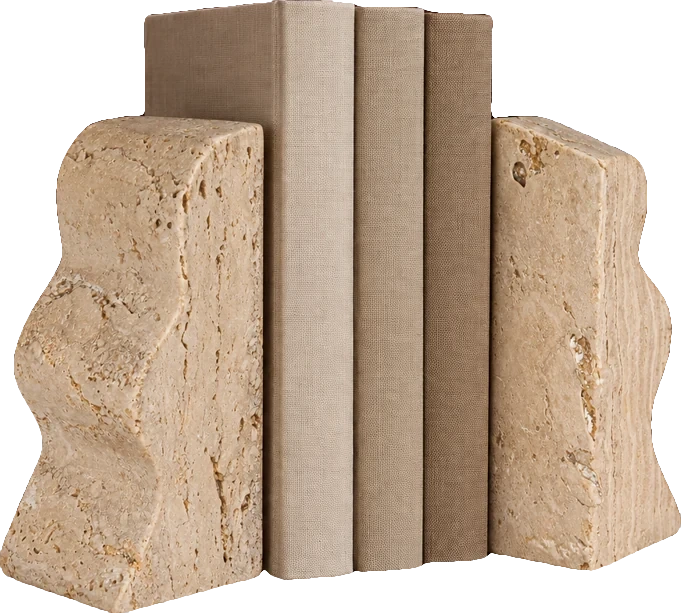
Natural travertine; pair; each 4.5 × 2 × 6 in
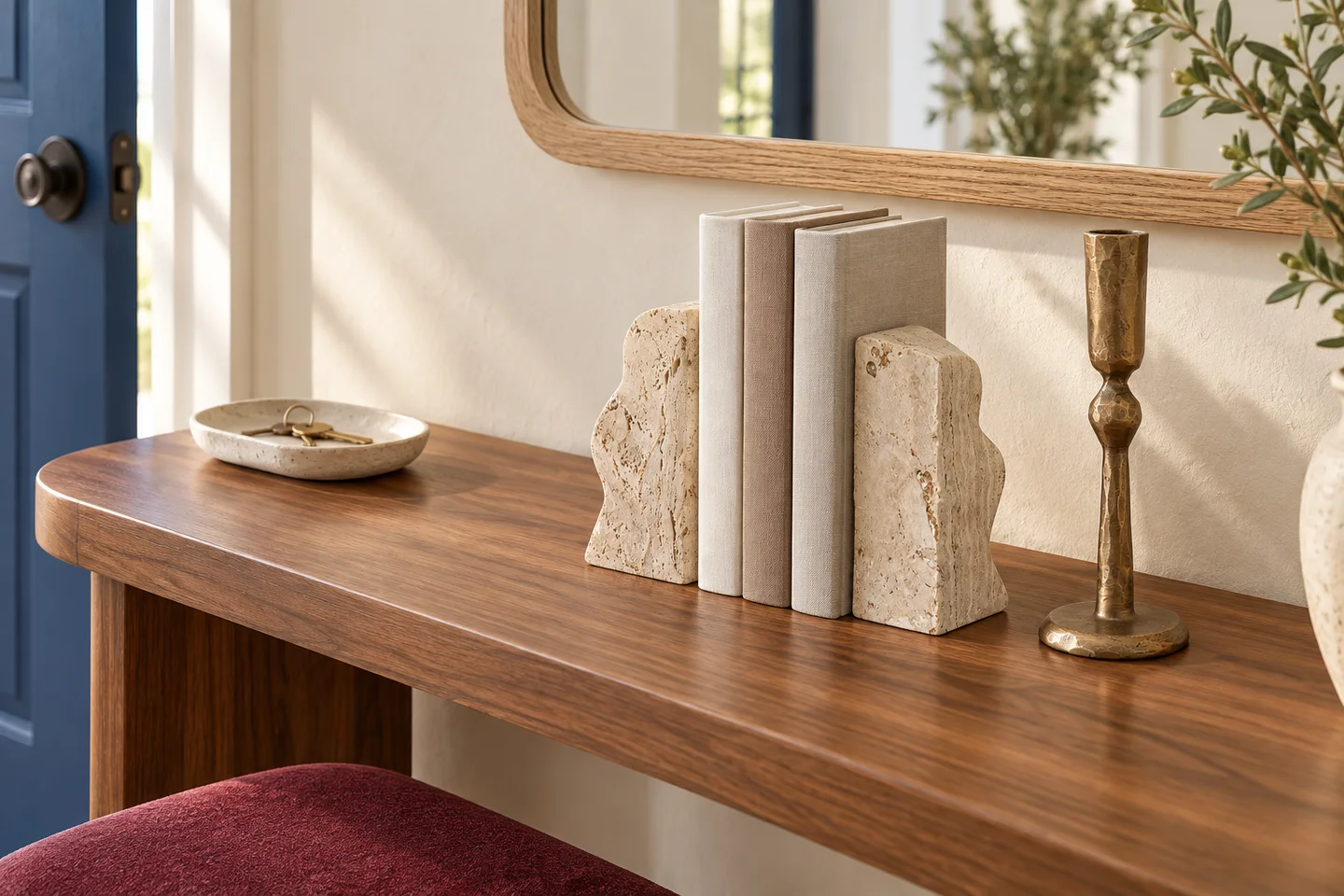
Travertine bookends add weight and a wavy outline to an otherwise straight run of books.
Before you choose Each is 4.5 × 2 × 6 in; check the shelf’s load capacity and use surface protection where needed.

Beige; model EC1456; one arch
A marble arch gives books and rectangular frames one contrasting curve.
Before you choose A decorative object, not a structural shelf support. Check the 8 × 1.5 × 5 in dimensions.

COLORA; Mourning Dove (light brown / grey)
A small, muted porcelain vase adds a softer surface beside glossy glass or metal.
Before you choose Confirm the selected size on the linked listing; the listing contains differing dimension descriptions.
Place the books in groups you can use
Keep books together by a system that helps you find them: subject, author or how often you use them. Start with an upright group, leaving enough space to take a volume out without disturbing the whole shelf. Bookends can define the edge where the shelf has no side support, provided their size and design suit the books.
A short horizontal stack can change the outline of the next group. Use it for books you are comfortable lifting together, and keep the largest at the bottom so the stack sits neatly. Avoid making a frequently read book the base of a complicated display; retrieving it should be a small, easy action.
Choose a few objects with different outlines
A rounded vase interrupts the straight lines of book spines, while a marble arch introduces an open shape. The selected arch is 8 inches wide, 5 inches high and 1.5 inches deep; allow for its full width when measuring a place between books. Its decorative role works best when the opening remains visible. Give it its own support on the shelf rather than treating it as a bookend.
Try the matte vase on a neighboring shelf or on its own before grouping it beside the arch. The selected small size is about 6 inches tall and 4 inches across, so compare that actual footprint with the books nearby. View both pieces from the doorway. Natural marble varies from piece to piece; judge the arch by its overall form and color relationship rather than expecting identical markings.
Repeat color across the shelves without making a grid
Choose a small connection to the room: warm white from the walls, a brown from the wood furniture or muted green from a rug. Repeat it at different heights through a vessel, book cover or frame. Keep the repetitions slightly offset so the eye can move across the display instead of meeting a vertical column of identical accents.
Stand back and look for an area that feels much darker or busier than the rest. Move one existing piece before buying another to balance it. The shelves can have different amounts of open space; a row of useful books and a quieter display shelf can belong in the same arrangement.
Finish with the view and the weekly routine
Check the shelves from the main seat as well as the doorway. A piece hidden behind a frame may disappear at one angle, while an object near the edge may project into a walking route. Keep each piece fully supported on the shelf, and leave space to lift it without meeting the shelf above.
Remove a few objects if cleaning would require dismantling every group. Check each material's care guidance rather than assuming the same cleaner suits the shelf and its contents. Photograph the arrangement if you want a reference after dusting, then let it evolve as books are read and favorite objects change. Empty space is useful room for that life to continue.