A chair made from packaging material
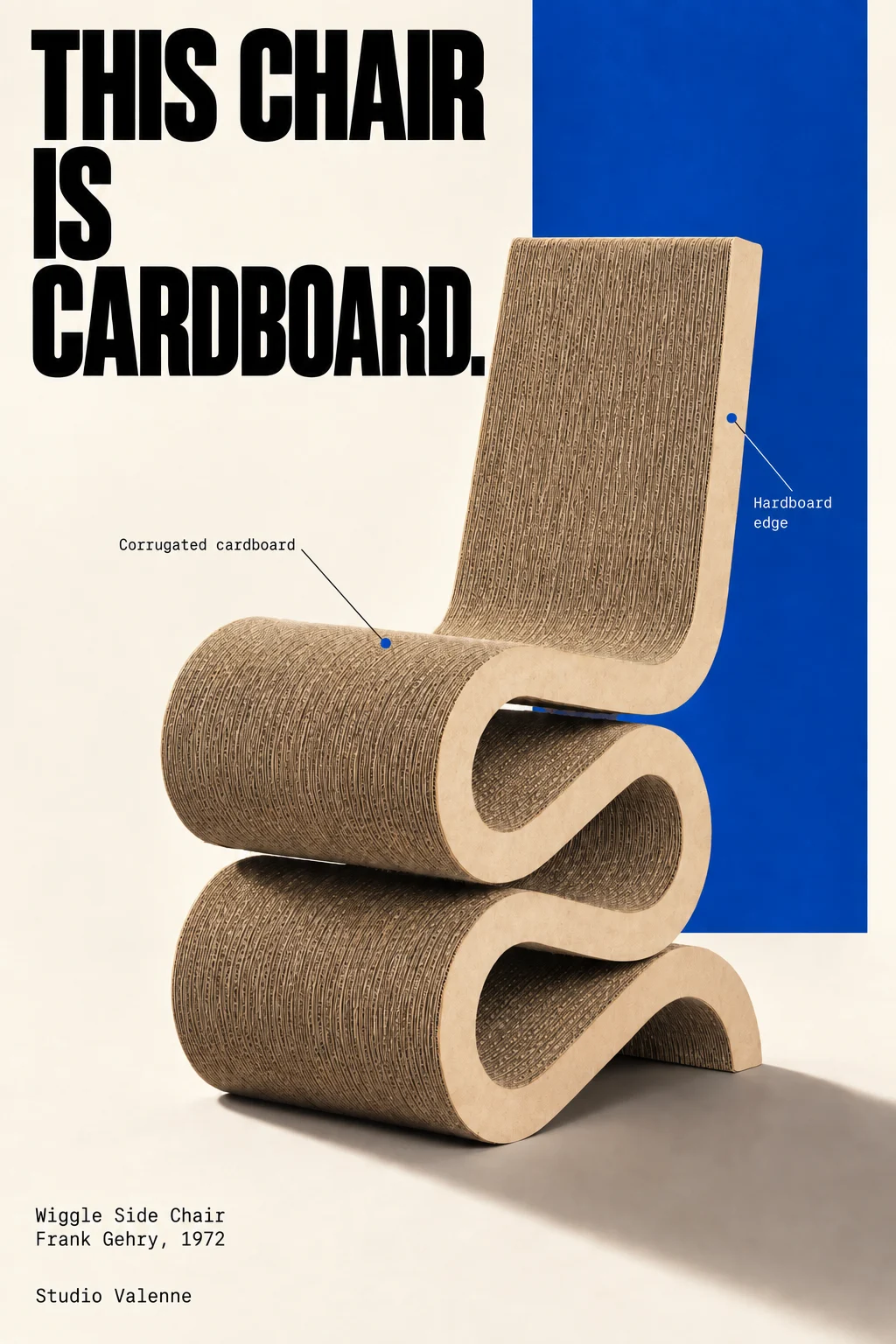
Gehry is best known as an architect. With Easy Edges, he worked at the scale of furniture, using a material usually associated with boxes and packing. Cardboard became the visible body of the chair.
Vitra identifies the structure as corrugated cardboard and the edges as hardboard. That distinction explains the two surfaces you see: a densely layered texture across the front and a flatter outline along each side. The natural hardboard is undyed, so its tone can vary.
Follow the curve
Start at the top of the back and follow the side down toward the seat. The profile turns outward, folds back underneath itself and continues through a series of rounded bends toward the floor.
Those repeated curves give the chair its name. Seen from the front, the layers create fine stripes. From the side, the broad, flat edge makes the looping shape easier to read. A close view reveals a very different object from the smooth outline seen across a room.
1972, then and now
The year attached to the Wiggle Side Chair is its design date. An individual chair can have been made much later: the National Gallery of Victoria’s example, for instance, was designed in 1972 and manufactured in 2001.
The current Vitra version keeps the corrugated-cardboard structure and hardboard edges. The appeal is still easy to see in a close-up: the construction supplies both the shape and the surface pattern.
The reading shelf
More chairs, more ways to build them.
Use these references to compare unusual materials and structures across furniture history.

Charlotte & Peter Fiell · TASCHEN · hardcover
A compact illustrated reference for comparing chair forms, materials and the designers behind them.
Before you choose Choose the revised multilingual edition and check the seller and condition.
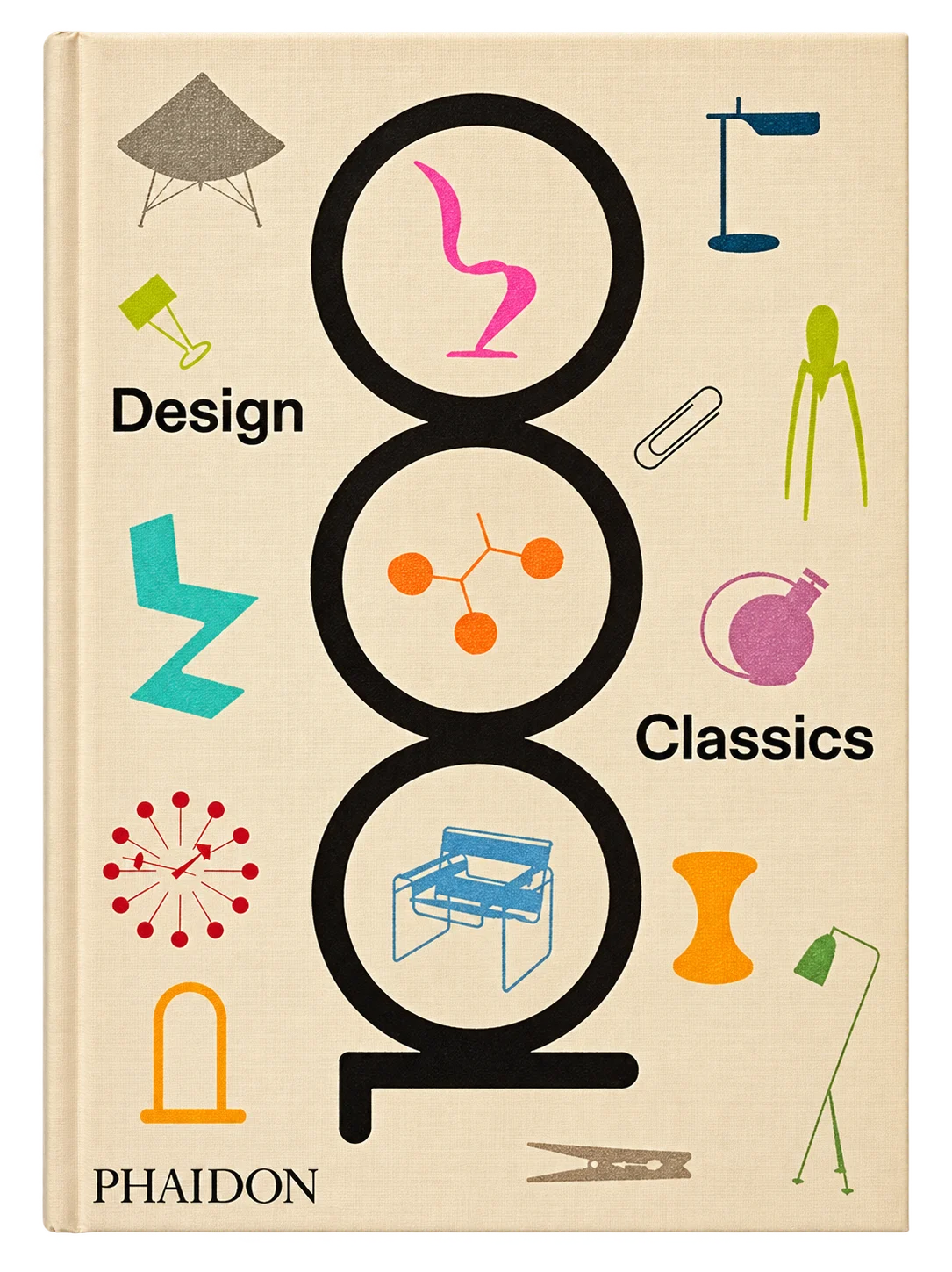
Phaidon Editors · Phaidon · hardcover
A broad visual reference that puts furniture, lighting and everyday objects in the same design history.
Before you choose A large-format reference book. Check the 2022 English-language edition and its dimensions.
Sources & editorial notes
Vitra — Wiggle Side Chair · Checked 2026-09-13Vitra Japan — Wiggle Side Chair · Checked 2026-09-13National Gallery of Victoria — Wiggle side chair · Checked 2026-09-13Practical suggestions are editorial judgments; adapt them to your needs. No personal product testing is claimed.